A retailer shipping weekly mixed pallets from New Jersey to San Juan can either pay for a half-empty truck and inconsistent parcel bills, or pool freight into a tight, predictable consolidation program that slashes cost and transit noise. Some shippers report that smart consolidation has cut their Puerto Rico shipping costs by as much as 80% compared with shipping parcels individually, turning a chronic expense headache into a strategic advantage.
That kind of improvement is not luck. It comes from disciplined planning, reliable partners, and a realistic understanding of how the Puerto Rico lane behaves. Consolidation is more than “putting more boxes on a pallet.” Done well, it aligns inventory, sailing schedules, port operations, and customs to move freight with less waste and fewer surprises.
Why Freight Consolidation Matters for Puerto Rico
Puerto Rico sits in a sweet spot for North American shippers: close enough for short ocean transits, yet distinct enough that mistakes at the warehouse, port, or paperwork level can add days or unexpected cost. That gap between proximity and complexity is exactly where consolidation earns its keep.
Executives across the Americas have been rethinking their networks to be closer to customers and production. As Morten Johansen, COO of DP World Americas, put it, the past few years have underscored the need for adaptable supply chains and highlighted the strategic advantages of nearshoring in the region. Puerto Rico fits directly into that story as a nearshore hub serving both local consumption and broader Caribbean flows.
Consolidation supports that strategy in three big ways. It stabilizes transportation cost by turning many small, volatile moves into fewer, larger, contract-friendly shipments. It improves schedule control, because freight is planned around known cutoff times instead of ad hoc parcel pickups. And it simplifies visibility, allowing teams to track a single consolidated load across the water instead of hunting for dozens of tracking numbers and PRO bills.
Designing a Consolidation Strategy Around Puerto Rico’s Trade Lanes
Effective consolidation starts with mapping how freight actually moves into and out of Puerto Rico today. That means identifying primary origin regions, typical order sizes, order frequency, and whether freight is destined for distribution centers, stores, or direct customers on the island. Patterns usually emerge quickly: specific days when orders spike, lanes that always underutilize trucks, or high-volume SKUs that could anchor a weekly consolidation cycle.
Industry data on inter-Americas trade shows why this planning matters. A Colliers Supply Chain Solutions report found that fluctuating shipping costs were cited as a top operational challenge by thirty-six percent of respondents, with delays in cargo transit impacting thirty-one percent and customs clearance issues affecting fifteen percent. A well-designed consolidation program directly attacks all three by locking in more stable ocean contracts, building in realistic buffer around sailings, and standardizing documentation.
For Puerto Rico, a few structural decisions set the tone for the whole strategy. Many shippers choose a mainland consolidation hub close to a major port with frequent Puerto Rico service. Others build consolidation at their own regional distribution centers, then feed a smaller number of full containers or trailers to the ocean carrier. The right model depends on shipment density and service requirements, but in both cases the goals are the same: predictable sailing windows, consistent cutoffs for vendors, and enough volume to fill containers or trailers efficiently without choking service levels.
Operational Best Practices: From Vendor to Consolidation Hub
Once the strategy is defined, execution at the origin side determines whether consolidation actually saves money or just adds work. Vendors and internal shipping locations need clear, simple rules: label formats, carton specs, pallet heights, and delivery windows into the hub. The more standard the inbound freight, the easier it is to build clean, damage-free consolidated loads that cube out containers bound for Puerto Rico.
Inventory practices also have to sync with the consolidation rhythm. Just-In-Time approaches can work well when they are aligned with sailing schedules and consolidation cutoffs. Guidance from logistics practitioners emphasizes that JIT inventory planning, when paired with freight consolidation, helps synchronize production and shipping, keeping inventory holding costs in check while still supporting on-time departures. For Puerto Rico, that might look like timing production runs so that finished goods hit the consolidation hub right before weekly vessel cutoffs rather than trickling in randomly.
On the floor, the small details pay off. Cartons bound for Puerto Rico should be clearly marked, ideally with scannable IDs tied to the island order. Mixed-SKU pallets for store delivery or DC replenishment should follow consistent layer patterns and stacking rules so they survive multiple touches between mainland hub, port, ocean vessel, and final delivery. Any special handling-temperature controls, high-value security procedures-needs to be built into the consolidation process rather than handled as one-off exceptions that disrupt the load plan at the last minute.
Using Data and Optimization to Plan Loads
Consolidation is a data problem as much as a trucking problem. Decisions about which orders to combine, when to ship, and how to load containers have real cost and service implications. Relying solely on spreadsheets and tribal knowledge makes it easy to miss savings or unintentionally create bottlenecks when volume spikes or patterns shift.
Recent research in freight transportation shows how much room there is for improvement. A study on spatio-temporal pattern mining and optimization in freight networks found that an advanced load-planning approach, known as SPOT, reduced travel distance and transportation costs by roughly half on large terminals when compared with industry-standard load planning strategies. While that study is not specific to Puerto Rico, it highlights the scale of savings that smarter algorithms can unlock when they are applied to consolidation decisions.
For shippers moving regular volumes to Puerto Rico, that translates into a few practical steps. Capture detailed shipment history down to order, SKU, weight, cube, and destination. Analyze which combinations of origins and destinations consistently under-fill equipment. Then either work with a 3PL or deploy planning tools that can evaluate many possible load combinations and sailing schedules, not just the obvious ones. The goal is to systematically balance cost and service: shipping often enough to protect in-stock performance on the island, but not so often that equipment sails half empty.
Managing Risk: Ports, Labor, and Customs
Even the best consolidation plan can be derailed by events at the port or in the regulatory environment. Labor negotiations, schedule changes, and weather events can all disrupt the flow between mainland hubs and Puerto Rico. In late 2024, for example, the International Longshoremen’s Association and the United States Maritime Alliance resumed contract negotiations that influenced expectations around port operations and potential disruptions across U.S. East and Gulf Coast gateways. For shippers feeding Puerto Rico through those ports, that type of development is a reminder to keep contingency plans current.
Consolidation actually helps manage these risks when it is designed with flexibility in mind. Building buffers into schedules, maintaining the option to divert through alternative ports when feasible, and having clear communication channels with carriers gives teams more room to maneuver when something changes. On the customs side, standardized documentation packages for consolidated shipments reduce clearance errors and speed issue resolution when questions arise. The key is treating risk planning as a core part of the consolidation design, not an afterthought handled only when a disruption hits.
Putting It All Together: Building a Puerto Rico Consolidation Playbook
For organizations that treat Puerto Rico as a core market, consolidation should be documented as a repeatable playbook, not just a loose set of habits. That playbook typically starts with volume and lane analysis, defines the consolidation hub strategy, outlines vendor and warehouse standards, and sets target sailing and delivery cadences for the island. It also specifies who owns which decisions-transportation, inventory, customer service-so that trade-offs between cost and service are made consciously instead of by default.
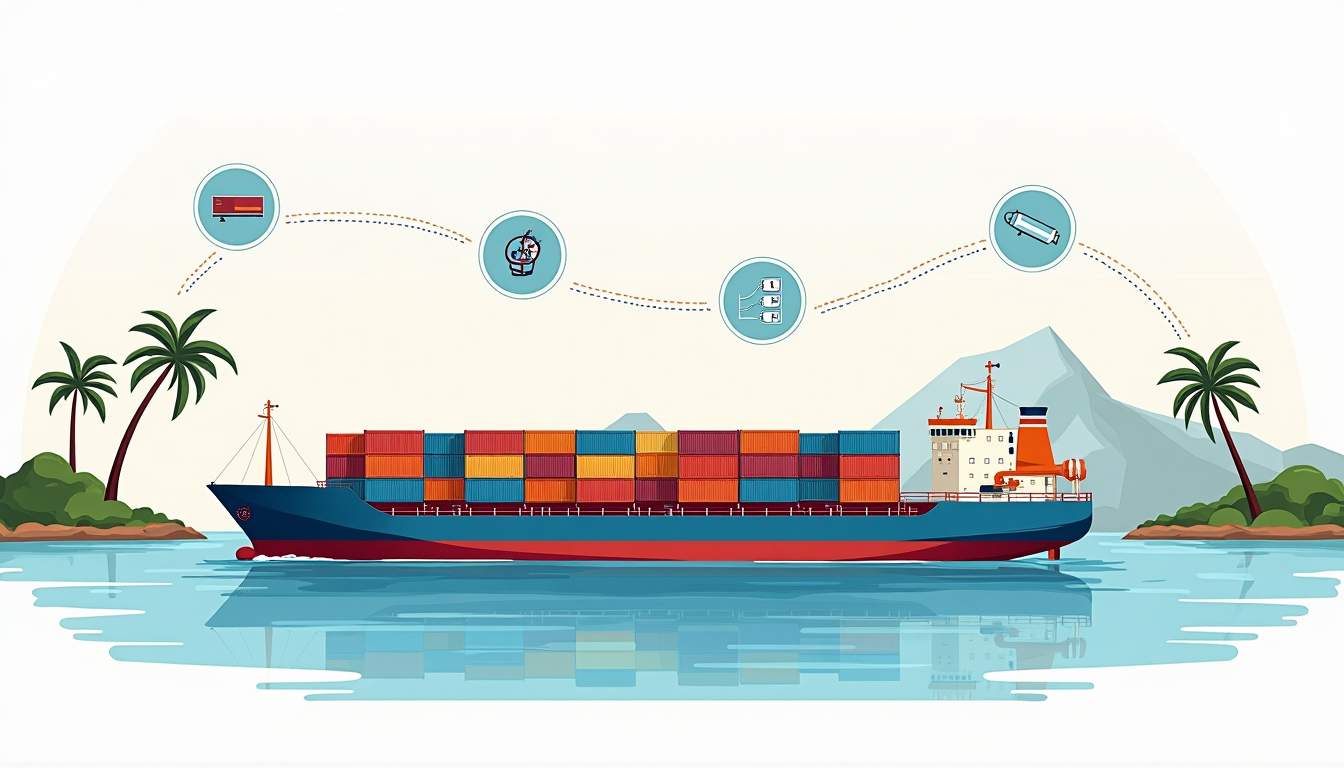
Larger networks often need tools that can handle the complexity of this planning reliably. Research on large-scale in-transit freight consolidation has shown that sophisticated mathematical approaches, such as a redesigned Benders decomposition method, can significantly scale up the ability to solve complex consolidation problems, making it feasible to optimize many shipments and hubs simultaneously. Even if a shipper does not deploy that exact method, the takeaway is clear: the technology exists to manage Puerto Rico consolidation with a level of precision that was impractical a few years ago.
From there, continuous improvement keeps the program sharp. Regularly review performance metrics such as sailing utilization, landed cost per unit, on-time delivery to Puerto Rico customers, and customs clearance success. When those reviews are tied back to the playbook, teams can adjust schedules, packaging standards, or vendor requirements quickly. The result is a freight consolidation program that makes shipping to Puerto Rico not just cheaper, but more reliable and predictable for both the business and its customers on the island.