
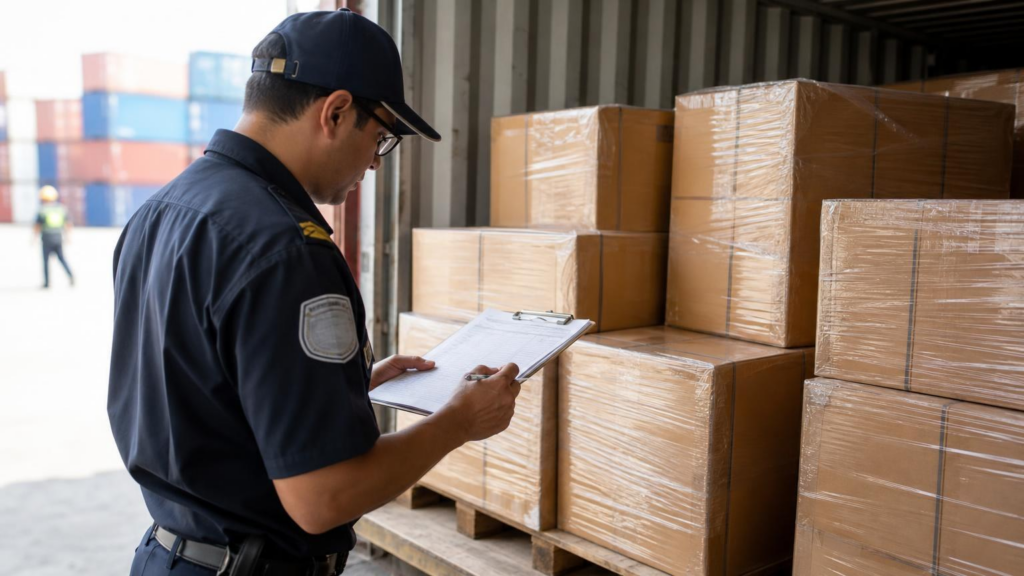
Shipping goods from the USA as part of a consolidated container sounds straightforward until you hit the paperwork. Multiple shippers sharing a single container means multiple sets of documentation, different duty rates, and a customs process that can trip up even experienced importers. Understanding the customs and import regulations for consolidated shipments originating in the United States is the difference between cargo clearing in a day and sitting at a port for weeks while you scramble for missing certificates. Whether you’re a small business importing a few pallets of product or a freight forwarder managing dozens of consignees in one box, the regulatory framework is specific, layered, and unforgiving of mistakes. Here’s what you actually need to know to get it right.
Core Principles of Consolidated Shipping from the USA
Consolidated shipping exists because most businesses don’t have enough cargo to fill an entire container. Instead of paying for 20 or 40 feet of space you won’t use, your goods share that container with shipments from other companies. A consolidator, sometimes called an NVOCC (Non-Vessel Operating Common Carrier) or freight forwarder, collects cargo from multiple shippers, packs it into one container, and manages the logistics from origin to destination.
The cost savings are real: a full container load (FCL) from the US East Coast to Northern Europe might run $2,500 to $4,500 in 2026, while an LCL shipment of two pallets could cost $600 to $1,200 depending on volume and weight. But those savings come with added complexity on the documentation and customs side, because every individual shipment inside that container has its own regulatory requirements.
Definition of LCL and Groupage Services
LCL stands for Less than Container Load, and groupage is essentially the European term for the same concept. Both describe a service where freight from multiple shippers is consolidated into a shared container. Your cargo is measured by volume (cubic meters) or weight (whichever produces the higher freight charge), and you pay only for the space you use.
The key distinction from an FCL shipment is that LCL cargo passes through a Container Freight Station (CFS) at both origin and destination. At the origin CFS, individual shipments are received, inspected, and loaded together. At the destination CFS, the container is “de-consolidated,” meaning each shipment is separated and made available to its respective consignee. This extra handling step adds time, typically three to five business days, and creates additional touchpoints where customs authorities may examine your goods.
The Role of the Master House Airway Bill (MAWB)
In ocean freight, the equivalent documents are the Master Bill of Lading (MBL) and House Bills of Lading (HBL). For air freight, you’ll deal with the Master Air Waybill (MAWB) and House Air Waybills (HAWB). The master document covers the entire container or shipment as a unit and is issued by the actual carrier to the consolidator. The house documents are issued by the consolidator to each individual shipper.
This two-tier system matters enormously for customs purposes. The destination country’s customs authority needs to see both the master and house documents to properly identify, classify, and assess duties on each individual shipment within the consolidated load. If a house bill is missing or contains errors, that specific shipment gets held, and depending on the destination country’s procedures, it can delay the entire container’s release. Accuracy at this stage isn’t optional; it’s the foundation everything else rests on.
Mandatory Customs Documentation and Filing
Getting the paperwork right is where consolidated shipments either succeed or fall apart. Each individual shipment within the container requires its own complete set of customs documents, even though they’re all traveling together. The consolidator typically coordinates this, but ultimate responsibility falls on the shipper and consignee.
Commercial Invoices and Packing Lists for Individual Units
Every shipment in a consolidated container needs its own commercial invoice and packing list. The commercial invoice must include the seller and buyer details, a clear description of the goods, the quantity, unit price, total value, currency, and terms of sale (Incoterms 2020). Customs authorities use this document as the primary basis for calculating duties and taxes.
Packing lists complement the invoice by detailing the physical characteristics: number of packages, dimensions, gross and net weights, and how goods are packed. For consolidated shipments specifically, each packing list should reference the corresponding house bill of lading number so customs can match individual shipments to their documentation. A common mistake is submitting a single packing list for the entire container; this will trigger delays and potentially a full physical exam at the destination port.
Electronic Export Information (EEI) Requirements
US exporters must file Electronic Export Information through the Automated Export System (AES) for any shipment valued over $2,500 per Schedule B classification, or for any goods requiring an export license regardless of value. The filing deadline is strict: EEI must be submitted and accepted no later than two days before the cargo is delivered to the carrier for ocean shipments, or prior to departure for air freight.
In a consolidated shipment, each individual shipper whose goods meet the threshold must file separately. The consolidator does not file on behalf of individual shippers unless specifically authorized as the US Principal Party in Interest (USPPI) agent. Failure to file carries penalties up to $10,000 per violation, and the Bureau of Industry and Security has been increasingly aggressive about enforcement since 2024. The Internal Transaction Number (ITN) generated by AES must appear on the bill of lading and commercial invoice.
Certificates of Origin and Trade Agreements
If the destination country has a free trade agreement with the United States, a Certificate of Origin can reduce or eliminate duties entirely. The USMCA (for Mexico and Canada), the US-Korea Free Trade Agreement, and various other bilateral agreements each have their own certificate formats and rules of origin criteria.
For consolidated shipments, each shipper claiming preferential treatment must provide their own certificate. The consolidator cannot issue a blanket certificate for the entire container. The certificate must demonstrate that the goods meet the specific origin requirements of the relevant agreement, which often means showing that a certain percentage of the product’s value was added in the US. Incorrectly claiming origin is treated as fraud in most jurisdictions, so if you’re not certain your product qualifies, consult a licensed customs broker before filing.
Valuation and Duty Assessment for Mixed Cargo
One of the trickiest aspects of consolidated shipments is that a single container might hold electronics, textiles, food products, and industrial components, each subject to different duty rates, different regulatory agencies, and different inspection protocols. Customs authorities assess each shipment independently, but the physical reality of everything being in one box creates unique challenges.
Harmonized System (HS) Code Classification
Every product crossing an international border needs an HS code, a standardized numerical classification used by customs authorities worldwide. The first six digits are internationally standardized; additional digits vary by country. Getting the HS code wrong is one of the most expensive mistakes in international trade because it directly affects the duty rate applied to your goods.
In a consolidated shipment, each product line within each individual shipment needs its own HS code. A shipment containing both cotton t-shirts (HS 6109.10) and polyester jackets (HS 6201.13) requires separate classifications, even though they’re in the same box from the same shipper. US Customs and Border Protection’s CROSS database is a free tool for researching rulings on specific products, and it’s worth checking before you ship rather than after your goods are stuck at a port.
Common classification errors in consolidated cargo include using a generic “catch-all” code for mixed goods, applying the wrong material composition percentage for textiles, and misclassifying assembled versus unassembled products. Each of these can result in duty underpayment (which triggers penalties and interest) or overpayment (which is just money thrown away).
De Minimis Thresholds and Tax Exemptions
Most countries set a de minimis threshold below which imported goods are exempt from duties and taxes. In the US, this threshold is $800 per shipment per person per day. Canada’s threshold sits at CAD $150 for duties and CAD $40 for taxes. The EU raised its de minimis to €150 for customs duties in most member states, though VAT applies from the first euro.
For consolidated shipments, each individual house bill of lading is typically treated as a separate shipment for de minimis purposes. This means that if a consolidated container holds 30 individual shipments each valued at $500, each one could potentially qualify for de minimis treatment when entering the US, even though the total container value is $15,000. However, customs authorities are alert to “splitting” schemes where a single large shipment is artificially divided into smaller ones to exploit de minimis thresholds. If CBP determines that related shipments were split to avoid duties, they can aggregate the values and assess penalties on top of the owed duties.
Restricted Items and Prohibited Goods
Not everything can legally travel in a consolidated container, and the rules get more complex when multiple shippers’ goods are packed together. A single prohibited item can hold up an entire container, affecting every consignee in the shipment.
Hazardous Materials and Lithium Battery Regulations
Hazardous materials, or dangerous goods, require special handling, documentation, and packaging under both US DOT regulations (49 CFR) and international standards (IMDG Code for ocean, IATA DGR for air). In consolidated shipments, hazmat items must be properly declared, classified, and segregated from incompatible materials within the container.
Lithium batteries deserve special attention because they’re everywhere: in laptops, power tools, medical devices, and consumer electronics. As of 2026, lithium-ion batteries shipped as cargo on passenger aircraft face strict quantity limits, and even in ocean freight, they require UN38.3 test summaries and specific packaging. The consolidator must know about every hazmat item in the container because improper segregation, like placing oxidizers next to flammable liquids, creates genuine safety risks and massive regulatory liability. Undeclared hazmat in a consolidated shipment can result in fines exceeding $80,000 per violation and criminal prosecution.
Export Administration Regulations (EAR) Compliance
The Export Administration Regulations, administered by the Bureau of Industry and Security (BIS), control the export of dual-use items: products with both commercial and potential military applications. This includes certain types of software, encryption technology, advanced materials, sensors, and telecommunications equipment.
Each shipper in a consolidated container is responsible for determining whether their goods are controlled under the EAR and whether an export license is required based on the Export Control Classification Number (ECCN) and the destination country. The consolidator doesn’t typically perform this analysis, which means a shipper who fails to obtain a required license puts the entire shipment at risk. Consolidated shipments to countries under US sanctions, such as those on the BIS Entity List, face heightened scrutiny, and even a single non-compliant shipment in the container can trigger a hold on the entire load.
The Physical Inspection and Clearance Process
Once your consolidated shipment arrives at the destination port, it enters the customs clearance pipeline. This process varies significantly by country, but the general framework follows a predictable pattern that’s worth understanding before your goods arrive.
Customs Exams and De-consolidation Procedures
Customs authorities use risk-based targeting systems to decide which containers get examined. Consolidated shipments statistically face higher examination rates than FCL shipments because the mixed cargo profile raises more flags in automated screening systems. In the US, CBP’s Automated Targeting System assigns risk scores based on shipper history, origin, commodity type, and other factors.
When a consolidated container is selected for examination, the process typically works like this: the container is moved to an examination facility, where it may undergo non-intrusive inspection (X-ray or gamma-ray scanning) first. If that scan raises questions, a physical exam follows. The container is opened, and specific shipments identified by their house bills are pulled for inspection. This is where proper labeling and packing list accuracy become critical. If customs officers can’t match physical goods to documentation, the exam expands, costs escalate, and delays multiply. Exam fees range from $300 to $1,000 or more depending on the port and type of exam, and these costs are typically passed to the consignee whose shipment triggered the inspection.
Handling Fees and Port Charges
Consolidated shipments incur fees that FCL shipments don’t. CFS charges at the destination port cover the labor and space needed to de-consolidate the container and separate individual shipments. These fees typically run $50 to $150 per cubic meter in 2026, depending on the port.
Demurrage and detention charges are the real budget killers. If a customs exam or documentation issue delays clearance beyond the free time allowed (usually three to five days at most ports), daily charges start accumulating. At major US ports like Long Beach or Savannah, container demurrage can hit $150 to $400 per day after the free period expires. For consolidated shipments, one shipper’s documentation problem can create demurrage charges that affect everyone in the container, though how those costs are allocated depends on the consolidator’s terms of service.
Best Practices for Seamless Import Compliance
Getting consolidated shipments through customs without headaches comes down to preparation, communication, and choosing the right partners. Here are the practices that consistently make the difference between smooth clearance and costly delays.
Work with a licensed customs broker at the destination who has specific experience with consolidated cargo. Not all brokers handle LCL well; some are set up primarily for FCL and treat consolidated shipments as an afterthought. Ask prospective brokers how many consolidated entries they process monthly and what their average clearance time is.
File documentation early and file it accurately. Submit commercial invoices, packing lists, and certificates of origin to your broker at least five days before the vessel arrives. For US imports, the ISF (Importer Security Filing) must be submitted at least 24 hours before the cargo is loaded onto the vessel at the foreign port, and late filings carry a $5,000 penalty per violation.
Communicate with your consolidator about every item in your shipment, especially anything that might be regulated: batteries, chemicals, food products, textiles, electronics with encryption. Surprises at the port are expensive. Label every package with the house bill of lading number, consignee name, and a brief description of contents. This simple step can save hours during a customs exam.
Keep records for at least five years. US customs law requires importers to maintain all entry documentation for five years from the date of entry, and CBP can audit at any time during that window. A well-organized filing system, whether digital or physical, is your best defense against post-entry audits.
The customs and import rules for consolidated US shipments aren’t impossibly complex, but they demand attention to detail that many shippers underestimate. Each shipment in a consolidated container is its own regulatory universe: its own HS codes, its own valuation, its own compliance requirements. The container is just the vehicle. Treat your documentation as if you were shipping alone, coordinate closely with your consolidator and customs broker, and build in buffer time for the unexpected. That’s how experienced importers keep their goods moving and their costs predictable.