You’ve just landed your first bulk order from a San Juan retailer—50 units of your best-selling product that need to ship from your Miami warehouse by Friday. You open Google, type “shipping to Puerto Rico,” and immediately hit a wall of contradictory information. Is it domestic or international? Do you need customs forms? Why does one carrier quote $300 while another quotes $850 for the same shipment?
Puerto Rico shipping occupies a unique gray zone. It’s technically domestic (no customs clearance needed), but Jones Act restrictions limit your carrier options and drive costs higher than mainland shipping. Understanding this complexity is the first step to making smart shipping decisions.
E-commerce sellers face different challenges than traditional freight shippers. You need tracking integration with your platforms, flexible volumes that scale with demand, returns management capabilities, and the ability to balance speed against cost. Most shipping guides ignore these e-commerce-specific needs entirely.
We’ve analyzed seven shipping services that actually serve the Florida-Puerto Rico route, comparing them on speed, cost structure, volume flexibility, and e-commerce integration capabilities. Here’s what you need to know about each option.
1. Nobel Relocation Moving & Storage
Best for: Established e-commerce businesses shipping 3-8 pallets regularly with fragile inventory, white-glove delivery requirements, or complex logistics coordination needs
Nobel Relocation Moving & Storage provides fully integrated freight services with FIDI certification and direct control over the entire transportation chain from Florida to Puerto Rico.
When your Puerto Rico shipments involve fragile inventory, time-sensitive delivery windows, or complex logistics coordination, Nobel Relocation’s full-service approach eliminates the accountability gaps that plague multi-vendor shipping arrangements. Their international moving expertise translates directly to hassle-free Puerto Rico freight management.
Think of Nobel Relocation as the difference between hiring a general contractor versus coordinating individual subcontractors yourself. Most freight forwarders operate as brokers—they don’t own trucks or control the actual transportation. They’re essentially middlemen connecting you with various carriers, warehouses, and delivery services. When something goes wrong, you’re stuck playing phone tag between multiple companies, each pointing fingers at the others.
Nobel Relocation operates differently. As a FIDI-certified company with over 25 years navigating Jones Act compliance, they maintain direct control over your shipment’s entire journey. FIDI certification—that’s the Fédération Internationale des Déménageurs Internationaux—represents international quality standards that most domestic freight forwarders never achieve. It means Nobel undergoes regular quality audits, maintains strict insurance standards, and provides clear accountability mechanisms if problems occur.
Integrated Operations Create Single-Point Accountability: Nobel’s operations span four major Florida shipping ports—Miami, Fort Lauderport, Jacksonville, and Tampa. This isn’t just geographic convenience. It means they control the pickup, consolidation, ocean transport coordination, and delivery coordination without handing your shipment off to unknown third parties. If your Orlando warehouse needs temperature-controlled transport followed by white-glove delivery to a San Juan retail location, you’re working with one team that coordinates the entire chain.
LTL Shipping for Cost-Effective Flexibility: Their Less-Than-Truckload service hits the sweet spot for e-commerce sellers shipping 3-8 pallets. You’re not paying for empty container space, but you’re getting professional freight handling that parcel carriers can’t match. Many online sellers find this particularly valuable when testing the Puerto Rico market—you need freight-level service without committing to full container volumes.
Groupage Consolidation Reduces Per-Unit Costs: Here’s where Nobel’s integrated operations really shine. They consolidate multiple sellers’ shipments into single containers, spreading the Jones Act shipping costs across all participants. You get container rates without shipping full containers. The process works like this: Nobel collects your pallets at their consolidation facility, combines them with other shipments heading to Puerto Rico, ships the full container, then deconsolidates and delivers to individual recipients. Transit times run slightly longer than dedicated service—expect an additional 2-3 days for consolidation—but the cost savings often justify the wait for non-urgent inventory.
White-Glove Handling Protocols Matter for Premium Products: If you’re shipping electronics, furniture, glassware, or any high-value goods, Nobel’s handling protocols become critical. Standard freight carriers treat everything as commodity cargo—your $2,000 furniture piece gets the same handling as industrial parts. Nobel’s white-glove service includes custom crating, specialized loading techniques, and delivery teams trained in handling premium products.
2. Crowley Maritime Corporation
Best for: High-volume e-commerce sellers shipping 10+ pallets regularly who need predictable sailing schedules and container-load efficiency
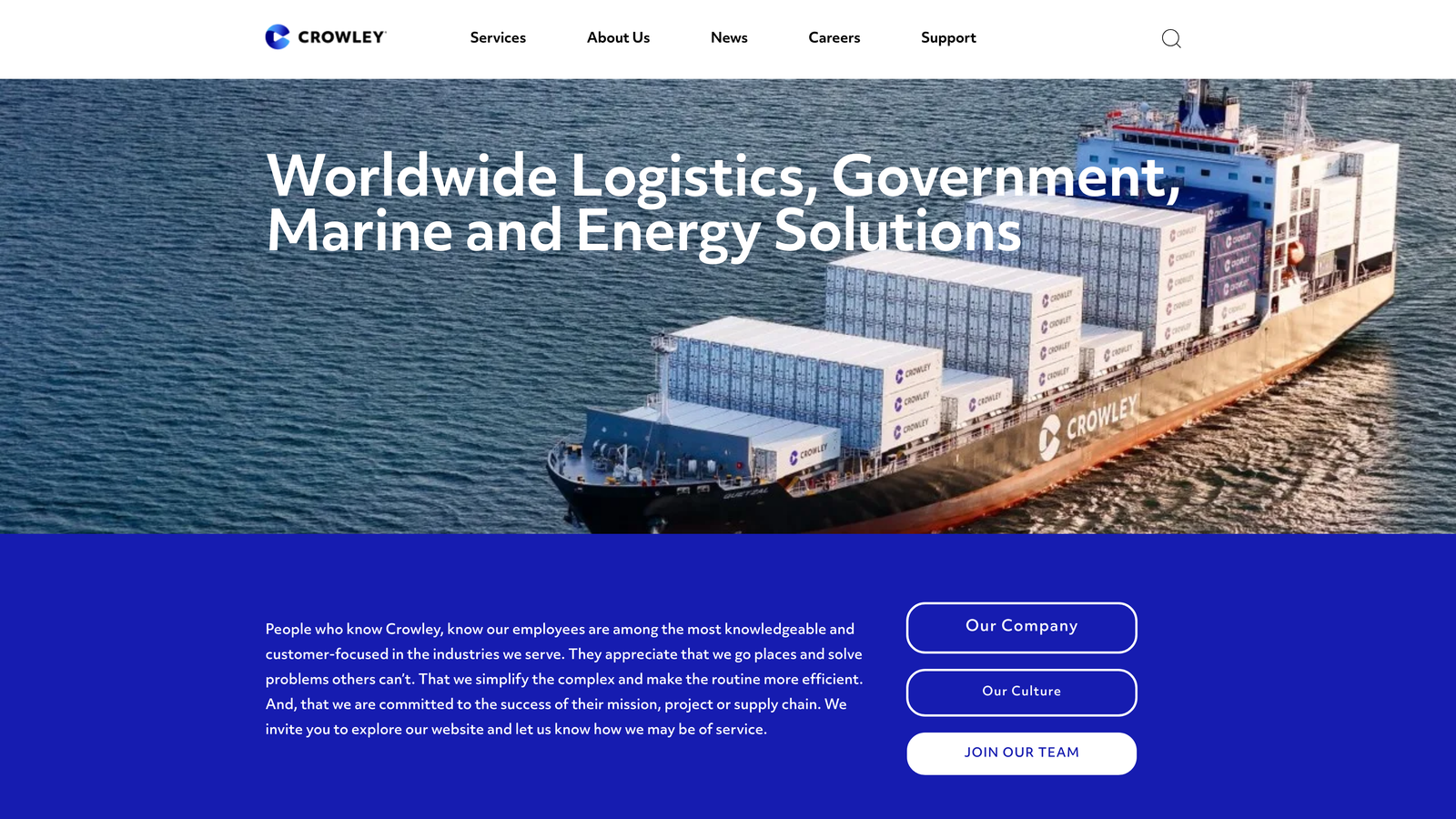
Crowley Maritime Corporation operates as one of the largest Jones Act carriers with multiple weekly sailings and dedicated Puerto Rico infrastructure optimized for full container loads.
As one of the largest Jones Act carriers serving Puerto Rico, Crowley Maritime offers the frequency and infrastructure that high-volume e-commerce sellers need—but their service model is optimized for container loads, not small-batch flexibility. If you’re shipping 10+ pallets regularly and need predictable sailing schedules, Crowley’s dedicated routes provide the reliability that inventory planning demands.
Where This Service Shines
Crowley operates Puerto Rico shipping as a core business line, not a side offering. This translates to multiple weekly sailings from Jacksonville (typically 3x per week) and Port Everglades (2x per week), giving you actual schedule options instead of “whenever we consolidate enough cargo” uncertainty that plagues smaller carriers.
Their established infrastructure in San Juan includes dedicated terminals and equipment, which matters more than you might think. When your container arrives, it’s not sitting in a general cargo area waiting for someone to figure out where it goes—Crowley’s systems know exactly where your shipment is and how to process it efficiently.
The real advantage shows up in transit time consistency. Express routes from Jacksonville to San Juan typically deliver in 3-4 days, and because Crowley controls the vessels (not brokering space on someone else’s ship), those schedules hold up even during busy seasons. For e-commerce sellers managing just-in-time inventory, this predictability prevents the costly scrambles that happen when shipments arrive three days late.
Full Container vs. Consolidation Economics
Here’s where understanding Crowley’s sweet spot becomes critical: they excel at full container loads (FCL), not small shipments. A standard 40-foot container holds roughly 20-22 pallets, and once you’re shipping 10+ pallets regularly, the economics start favoring FCL over less-than-container-load (LCL) options.
Crowley does offer LCL service—they’ll consolidate your 3-5 pallets with other shippers’ cargo—but expect longer transit times (5-7 days instead of 3-4) because they’re waiting to fill containers before sailing. The per-pallet cost for LCL also includes consolidation fees that make small shipments less economical than specialized LTL carriers.
The break-even calculation typically looks like this: if you’re shipping 8-10 pallets and can plan around weekly sailing schedules, compare Crowley’s FCL rate against your current per-pallet LCL costs. Many sellers find that committing to a full container—even if it’s not completely full—costs less than paying premium per-pallet rates for smaller volumes.
Refrigerated Container Capability
If you’re shipping temperature-sensitive products—food items, cosmetics, pharmaceuticals, or anything requiring climate control—Crowley’s refrigerated container (“reefer”) service solves a major challenge. Maintaining cold chain integrity to Puerto Rico is difficult with standard carriers, but Crowley’s reefer containers provide consistent temperature control throughout the journey.
3. Tropical Shipping
Best for: Growing e-commerce businesses shipping 1-8 pallets with flexible scheduling needs and appreciation for Caribbean logistics expertise
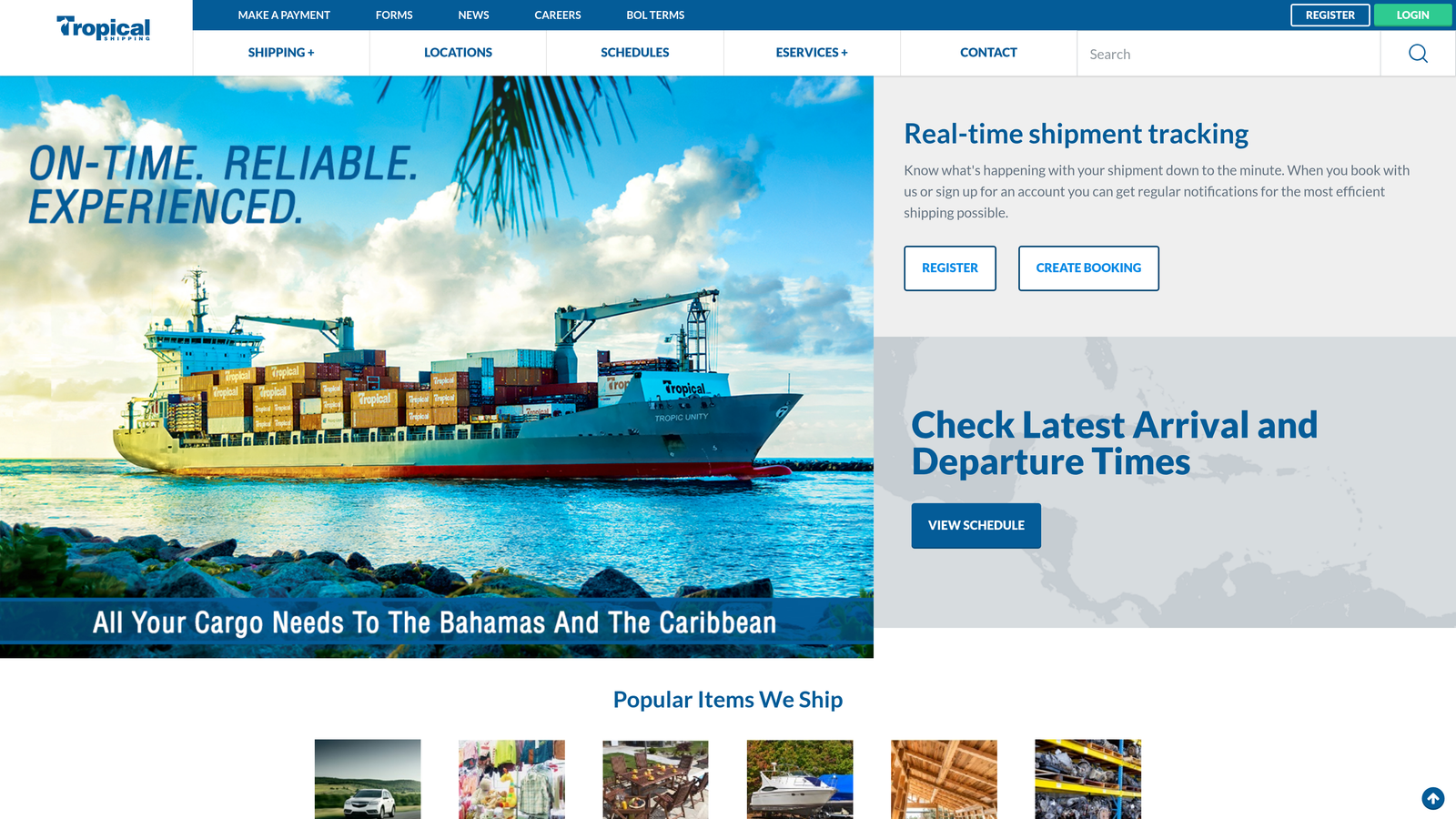
Tropical Shipping specializes exclusively in Caribbean logistics with LCL consolidation services designed specifically for smaller shippers.
Tropical Shipping built its entire business around Caribbean logistics—not as a side route to mainland operations, but as their core focus. This specialization creates genuine advantages for e-commerce sellers navigating Puerto Rico’s unique shipping challenges. Their LCL consolidation services are designed for smaller shippers from the ground up, not treated as an afterthought to container-load operations.
Where This Service Shines
Tropical’s Caribbean-exclusive focus means they’ve spent decades solving the exact problems e-commerce sellers face when shipping to island markets. Unlike carriers that treat Puerto Rico as just another domestic route, Tropical understands the infrastructure limitations, weather vulnerabilities, and documentation nuances that can derail shipments.
Their LCL consolidation model genuinely accommodates small volumes without punitive minimum charges. Many freight forwarders offer LCL as a reluctant service—their pricing structure makes it clear they’d prefer you ship full containers. Tropical’s economics work differently because they’ve optimized their consolidation operations for the 1-5 pallet shipper.
The company operates multiple Florida departure points including Miami, Fort Lauderdale, and Palm Beach. This geographic flexibility matters when you’re coordinating pickup from your warehouse or 3PL facility. Instead of trucking your freight to a single port (adding time and cost), Tropical can often collect from your location and consolidate at their nearest facility.
Their documentation process acknowledges that many customers are small business owners, not logistics professionals. The paperwork requirements for Puerto Rico shipping—while simpler than international—still trip up first-time shippers. Tropical’s customer service team walks you through the commercial invoice requirements, product declarations, and any special handling documentation your goods require.
Service Capabilities That Matter for E-Commerce
Door-to-Door Service Options: Tropical offers complete logistics management from your warehouse to your customer’s receiving dock in Puerto Rico. This eliminates the complexity of coordinating port pickup in San Juan—a significant advantage if you don’t have established relationships with Puerto Rican trucking companies. The door-to-door service includes customs documentation handling, port fees, and final delivery coordination.
Hazmat Shipping Expertise: If your e-commerce products include batteries, aerosols, cleaning products, or other hazardous materials, Tropical’s hazmat capabilities become essential. Many carriers restrict or charge premium rates for hazmat goods. Tropical’s Caribbean focus means they’ve developed efficient processes for products requiring special handling—they understand these aren’t exceptional shipments, they’re routine for many online sellers.
Flexible Consolidation Schedules: Tropical’s consolidation model provides regular sailing schedules while accommodating variable shipping volumes. If you ship 5 pallets one week and 2 pallets the next, their pricing structure doesn’t penalize you for volume fluctuations the way minimum-charge carriers do.
Making the Right Choice
The right Puerto Rico shipping partner depends entirely on your business stage and shipping patterns. If you’re moving 10+ pallets weekly with predictable schedules, Crowley’s container-load efficiency and multiple sailing options make them the clear choice. For smaller sellers testing the market with 1-5 pallets, Tropical Shipping’s LCL consolidation services provide professional handling without forcing you into full container commitments.
Nobel Relocation occupies the sweet spot for established e-commerce businesses shipping 3-8 pallets regularly with complex needs—fragile inventory, white-glove delivery requirements, or time-sensitive windows. Yes, you’ll pay 15-25% more than commodity carriers, but that premium buys single-point accountability and eliminates the hidden costs of damage claims and delay-related stockouts.
The biggest mistake? Choosing based solely on the lowest per-pallet quote. Factor in your time spent managing problems, damage claim frequency, and the cost of disappointed customers when shipments arrive late or damaged. A carrier charging $180 per pallet with 95% on-time delivery beats one charging $150 with 75% reliability every time.
Ready to eliminate the guesswork from your Puerto Rico shipping? Nobel Relocation’s team has navigated Jones Act compliance for over 25 years and can assess your specific needs—volume patterns, inventory type, delivery requirements—to recommend the most cost-effective approach. Get a free quote today and discover how integrated logistics management reduces both costs and headaches for e-commerce sellers shipping to Puerto Rico.