A Florida brand launches a new product, opens sales to all U.S. territories, and within days sees a surprising pattern: order after order from Puerto Rico. That spike is not an accident. In 2025, Puerto Rico’s retail delivery market is projected to hit $305.50 million with annual growth around 9.89% through 2030 and roughly 722,400 users, or 18.9% penetration. Demand is strong, tech adoption is high, and many shoppers are already used to buying from mainland stores.
For e-commerce businesses based in Florida, that growth is a massive opportunity. Puerto Rico is part of the U.S., but there is still an ocean leg, unique carrier rules, and a different last-mile environment to navigate. Getting inventory from Florida to Puerto Rico efficiently comes down to treating the route as a dedicated corridor: predictable flows, the right hubs, and partners who know the island.
Why Puerto Rico Is a Prime Market for Florida E-commerce
Puerto Rico behaves like a bridge market: U.S. regulatory structure and currency, but with demand patterns closer to fast-growing Latin American e-commerce hubs. For retailers shipping from Florida, that mix removes a lot of friction while keeping upside high. Orders move as domestic shipments, which simplifies documentation and customer expectations compared with exporting to another country.
The numbers behind that opportunity are telling. The projected $305.50 million retail delivery market with nearly one-fifth of residents using these services signals a customer base that is comfortable receiving purchases at home and relying on delivery as a routine part of daily life. That behavior translates well to general e-commerce: shoppers who already trust delivery apps are more likely to trust online retailers with higher-value orders.
On the digital side, platforms popular in the mainland are firmly embedded on the island. In 2025, WooCommerce is expected to lead e-commerce platforms in Puerto Rico with about $534.96 million in sales, representing 42.33% of sales across major platforms. That dominance matters for Florida sellers because it aligns tech stacks: if a store already runs on WooCommerce or similar tools, connecting to Puerto Rican customers is often more about shipping strategy than about re-platforming or rebuilding the site.
Understanding the Florida–Puerto Rico Shipping Corridor
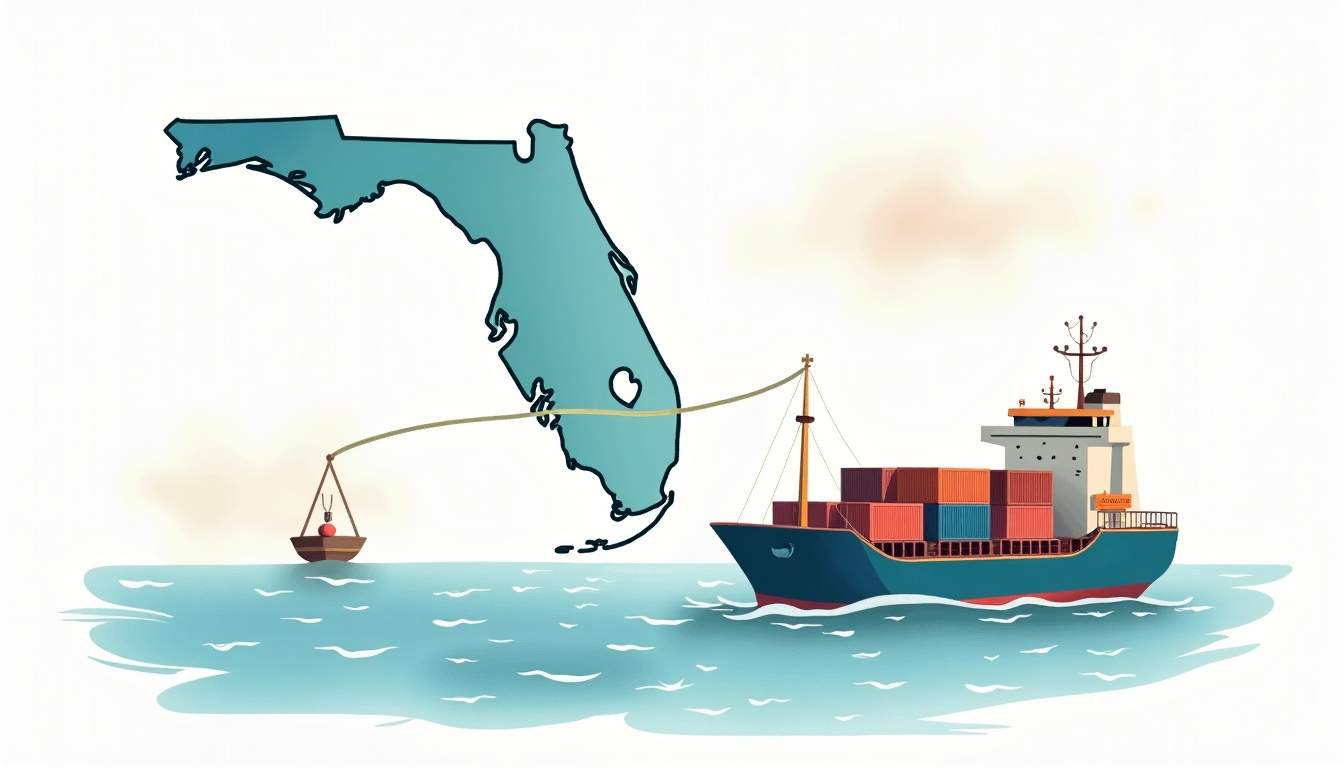
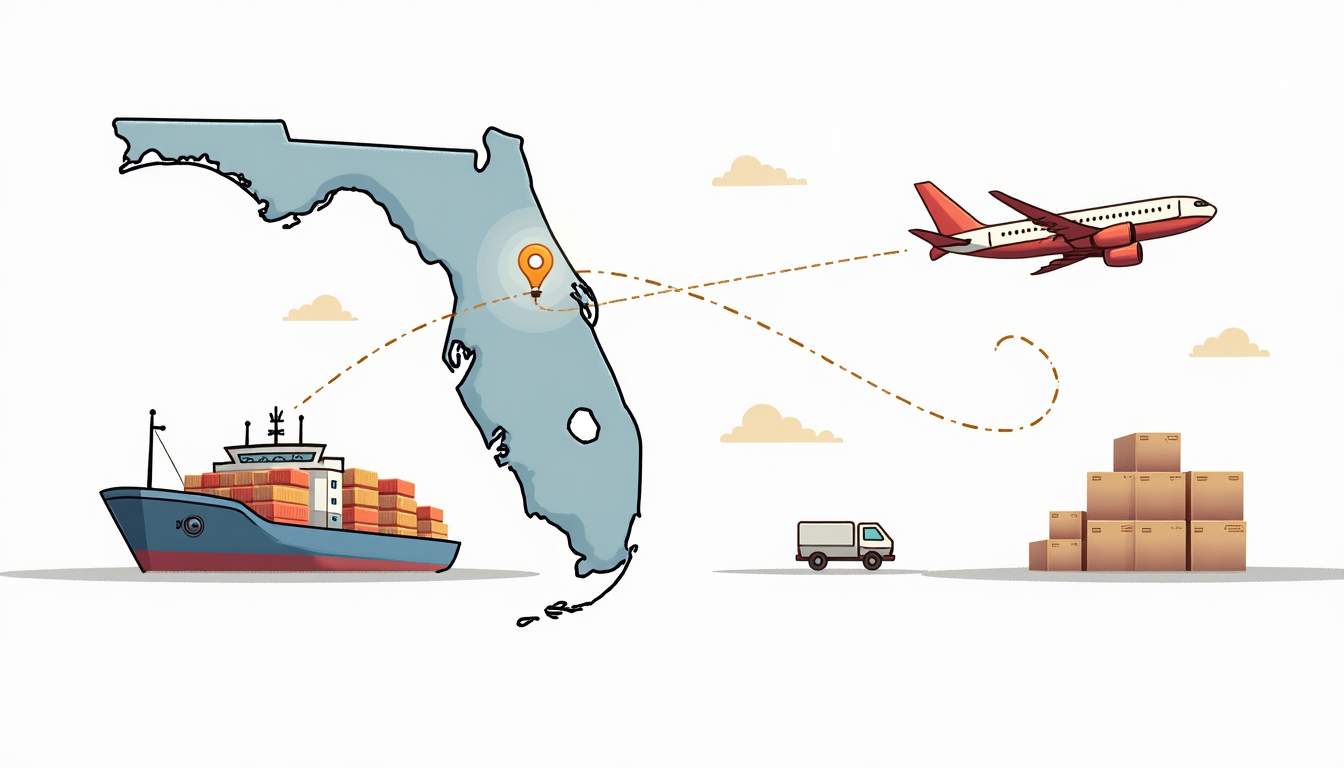
Most inventory moving from the mainland to Puerto Rico flows through a few key Florida gateways. Ports on the Atlantic and Gulf coasts handle containerized freight, while airports and parcel hubs manage air and express volumes. The corridor is not as fragmented as many cross-border routes; a handful of lanes and consolidation points manage most freight, which makes it easier for online retailers to design repeatable playbooks.
Jacksonville is especially important in this picture. Sergio Sandrin, President of logistics provider Aqua Gulf, puts it plainly: “Jacksonville is the gateway to Puerto Rico.” That role comes from its port infrastructure, highway access for Florida and Southeast distribution centers, and established ocean services connecting directly to Puerto Rican ports. Many e-commerce brands never deal with the port details themselves, but their 3PLs and freight forwarders build consolidation programs around this gateway.
From a retailer’s perspective, this corridor has a few consistent traits. Transit times can be reliable when inventory is staged in Florida and shipped on regular sailings or flights. Freight rates benefit from predictable volumes and consolidations. And because the route is so well established, there are many providers-from parcel consolidators to full-service 3PLs-who already offer Florida-to-Puerto-Rico solutions that plug into common e-commerce platforms.
Why Jacksonville Matters for Inventory Strategy
Thinking of Jacksonville as the main door to Puerto Rico helps clarify where inventory should sit. When stock is positioned in or near North Florida, it can flow into vessel departures or air cargo schedules efficiently, rather than being trucked long distances on tight cutoffs. That reduces risk when running promotions aimed at Puerto Rican shoppers or when replenishing local marketplaces and resellers.
For brands with broader U.S. distribution, this often leads to a dual-node approach: one or more mainland fulfillment centers serving most U.S. customers, and a Florida node feeding Puerto Rico and, in some cases, other Caribbean or inter-Americas lanes. As volumes grow, some retailers graduate to using dedicated containers or partial containers on regular sailings, which can lower per-unit shipping costs while keeping service levels consistent.
Choosing the Right Transport Mode: Ocean, Air, and Hybrid Options
Deciding how to move inventory from Florida to Puerto Rico usually starts with transport mode. Each choice-ocean, air, or a hybrid-comes with trade-offs on speed, cost, and flexibility. The right answer depends on product type, demand volatility, and the promises made to customers at checkout.
Ocean freight is the backbone for most durable goods and replenishment shipments. Full-container loads are common for brands with steady volume, but smaller sellers can tap into consolidations run by freight forwarders or 3PLs. These programs bundle freight from multiple shippers into shared containers, then break them down in Puerto Rico for final distribution via local carriers or parcel networks.
Air freight tends to be the tool of choice for urgent or high-value items, or when a brand is testing the market and wants lean inventory on the island. It costs more per unit, yet it can be worth it for product launches, seasonal peaks, or categories where shoppers expect fast delivery. Many parcel carriers combine ground pickup in Florida with air transport for at least part of the route.
A Typical Shipping Flow from Florida to Puerto Rico
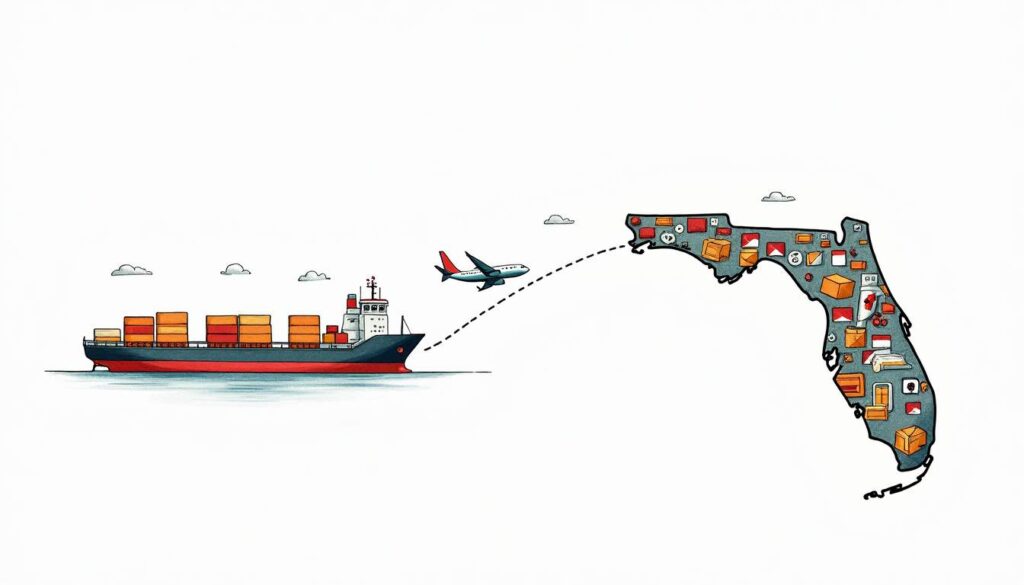
Even though every retailer’s setup is different, most flows follow a recognizable pattern. Inventory arrives at a Florida warehouse, often near Jacksonville or another major port or airport. Orders from Puerto Rican customers are picked and packed there, then fed into a consolidation or direct linehaul heading to the port or air hub. Once freight reaches Puerto Rico, it is cleared into local networks and handed off for last-mile delivery.
For smaller brands that rely heavily on parcel carriers, the process is even more streamlined. Orders are packed, labeled, and tendered to the carrier much like a domestic mainland shipment, with the carrier managing the transition across the water and into its Puerto Rican network. The key is choosing packaging, labeling, and service levels that match the island’s infrastructure and customers’ expectations.
Building an Adaptable, Nearshore Supply Chain
The last few years have pushed supply chains to become more flexible, and the Florida–Puerto Rico lane is no exception. Retailers that once treated Puerto Rican orders as occasional outliers now see them as a steady, growing share of their business. That shift is part of a broader regional trend toward nearshoring and inter-Americas trade.
A survey highlighted by the Puerto Rico Industry Journal found that 29% of respondents reported a significant increase in the importance of dedicated inter-Americas supply chains over the past three years. In the same coverage, Morten Johansen, COO of DP World Americas, noted that recent years have underscored the need for adaptable supply chains and the strategic advantages of nearshoring. That mindset fits perfectly with how Florida-based e-commerce companies can treat Puerto Rico: as a core nearshore market worthy of its own design, not an afterthought.
Adaptability here means more than changing carriers during peak season. It involves right-sizing safety stock for the island, planning shipment frequency from Florida, and keeping options open between ocean and air when demand spikes. It also means integrating data from e-commerce platforms, carriers, and fulfillment centers so that decisions about when to replenish Puerto Rico are based on real-time sales and inventory visibility.
Dedicated Inter-Americas Networks for E-commerce
As inter-Americas supply chains gain importance, logistics providers are building more tailored programs for e-commerce. These networks often combine consolidation in Florida with scheduled services into Puerto Rico and neighboring markets, then plug into local parcel and courier ecosystems. For a brand, this looks like a single integration feeding multiple lanes, with service levels designed specifically for regional shoppers.
Retailers that lean into these dedicated networks tend to gain resilience. When capacity gets tight or disruptions hit other global trade routes, nearshore flows between Florida and Puerto Rico often remain more stable. That stability helps maintain delivery promises during promotions and peak seasons, building trust with customers who may already be sensitive to delays from mainland sellers.
Working with Carriers and Logistics Partners
Picking the right partners is often the difference between a smooth Puerto Rico program and a constant headache. Some brands rely primarily on parcel carriers that treat Puerto Rico as part of their U.S. network, while others layer in freight forwarders, NVOCCs, or specialized Caribbean 3PLs who manage consolidation and island distribution.
Specialty providers that focus on underserved or hard-to-reach markets have become especially relevant. In 2025, International Bridge reported a record-breaking peak season, handling an unprecedented surge in small parcel volume to underserved areas such as Puerto Rico, highlighting how carriers built for these lanes can absorb sharp demand spikes. For e-commerce brands, those capabilities matter during holiday rushes, flash sales, and launch events when order volumes can jump quickly.
It is often helpful to diversify partners without overcomplicating the tech stack. One path is to use a primary parcel carrier for most orders but add a regional consolidator or 3PL for bulk inventory movements and B2B deliveries. Another is to rely on a single 3PL that orchestrates several middle-mile and last-mile partners behind the scenes, exposing only one interface back to the brand’s e-commerce and order management systems.
Evaluating Service Levels and Total Cost
When comparing options, looking only at the line-haul rate from Florida to Puerto Rico can be misleading. Total landed cost includes parcel surcharges, residential or remote-area fees on the island, warehousing charges, and any value-added services such as returns processing or kitting. It also includes the cost of missed delivery promises-customer service time, refunds, and damaged brand perception.
Service-level design should start with what is promised at checkout. If customers in Puerto Rico are given delivery windows that mirror mainland timelines, then carriers and 3PLs need the capacity and routing to support those promises during both steady and peak demand. For some brands, that means tightening the promise slightly while offering clear, proactive communication and reliable tracking rather than chasing overly aggressive lead times.
E-commerce Operations: From Checkout to Delivery in Puerto Rico
Shipping to Puerto Rico is not just a logistics decision; it is an operations and customer-experience decision that starts at checkout. Cart rules, shipping options, and address validation all need to handle Puerto Rican customers smoothly, without forcing them into “international” flows that add friction or confusion.
The dominance of modern commerce platforms on the island helps. As noted earlier, WooCommerce is projected to account for $534.96 million in sales in Puerto Rico in 2025, taking about 42.33% of platform-based sales. Many Florida brands already run on the same stack, which means shipping rules for Puerto Rico can be configured directly in their existing systems. That includes surfacing accurate delivery estimates, setting Puerto Rico–specific shipping rates, and routing orders to the right fulfillment node in Florida.
Since Puerto Rico is part of the U.S., many regulatory and customs hurdles that apply to international shipments simply do not appear. Still, operations teams must account for local realities: regional address formats, building types, gate codes, and rural routes all influence last-mile success. Integrations that pass detailed address data and delivery notes to carriers go a long way toward keeping first-attempt delivery rates high.
Aligning Inventory and Assortment with Island Demand
Inventory strategy for Puerto Rico benefits from understanding not just order volume, but also spending power and product mix. In consumer electronics, for example, the market shows strong value density: the average revenue per user in this segment is projected to reach $500.47 in 2025. That kind of spend can justify keeping higher-value stock closer to the customer, either through frequent replenishment from Florida or, as volumes grow, through local storage on the island.
Different categories will call for different approaches. Fast-moving, lower-value items might be shipped more often in consolidated waves from Florida, keeping inventory lean while still hitting delivery targets. Higher-ticket or bulky products may warrant a deeper on-hand position, reducing the risk of stockouts and backorders for Puerto Rican shoppers. In both cases, tight integration between e-commerce platforms, warehouse systems, and carrier data helps ensure that what is promised online is actually available and deliverable.
As demand from Puerto Rico continues to rise, Florida-based e-commerce businesses that treat the route as a strategic, well-designed corridor-rather than an edge case-will find it far easier to scale. With the right mix of gateways, modes, partners, and operational choices at checkout, shipping inventory from Florida to Puerto Rico can become one of the most predictable and profitable parts of an online retail business.