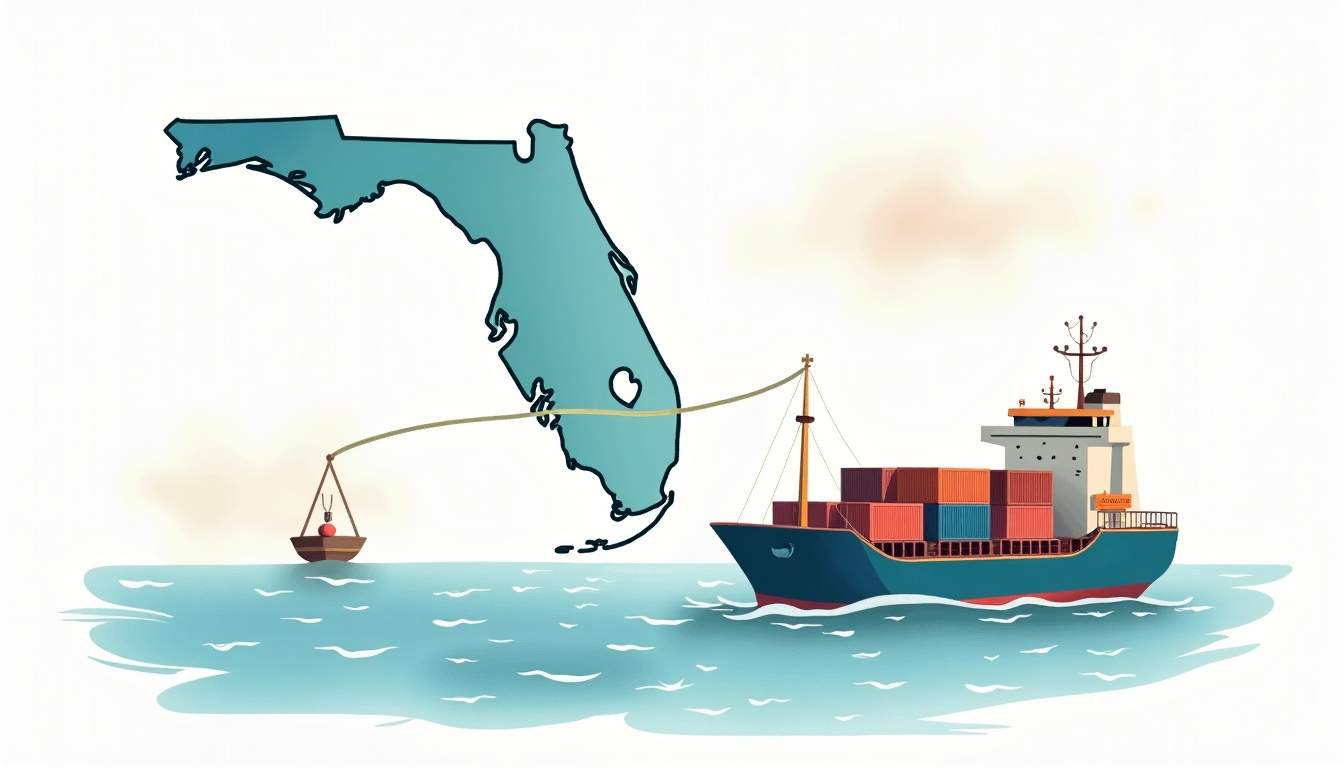

A pallet of retail goods leaving a warehouse in Orlando might seem only a short flight away from store shelves in San Juan, but the path it takes is far more complex. Less-than-truckload (LTL) freight to Puerto Rico combines domestic trucking, port handling, and ocean transport into one move that feels domestic but behaves a lot like an international shipment. Ocean benchmarks set the stage: recent estimates put full container load (FCL) rates from Florida to Puerto Rico in the ballpark of $2,800–$5,200, with less-than-container load (LCL) ocean freight around $150–$250 per cubic meter according to FreightAmigo. LTL carriers build those underlying costs into your door-to-door rate, then layer on their own linehaul, handling, and service fees. Knowing what’s behind the quote-and how your freight actually travels-goes a long way toward avoiding surprises.
How LTL Shipping to Puerto Rico Actually Works
Think of LTL shipping from Florida to Puerto Rico as a relay race with several handoffs. The carrier picks up your pallets, moves them through its regional network, hands them to a Puerto Rico service partner or its own island division, then loads them into an ocean container before the vessel sails. From your perspective it’s one shipment; behind the scenes it’s a carefully choreographed sequence of consolidations and transfers.
Many carriers funnel freight through key Florida ports, with Jacksonville and the South Florida ports playing major roles. Some providers advertise predictable patterns, like bi-weekly sailings from Jacksonville to San Juan operated by companies such as Southeastern Freight Lines. Your freight typically moves via standard LTL linehaul into one of these gateways, where it’s staged, loaded into containers, and queued for the next available sailing. Once the vessel arrives in Puerto Rico, your freight is unloaded, sorted again, and moved by local trucks for final delivery.
This multi-leg structure explains why transit times to Puerto Rico often feel different from comparable mainland lanes. You’re not just dealing with over-the-road miles and terminal handling. Vessel schedules, port cut-offs, and consolidation timing all matter. Choosing pickup dates with that full chain in mind-especially around holidays or peak seasons-helps align expectations and reduces the odds of freight missing a sailing.
- Local pickup from your Florida origin or inland U.S. point.
- Linehaul to the carrier’s Florida gateway terminal.
- Containerization and staging at or near the port.
- Ocean transit to San Juan on a scheduled sailing.
- Deconsolidation and local LTL delivery on the island.
What LTL Rates from Florida to Puerto Rico Really Include
LTL pricing to Puerto Rico looks simple on a quote sheet-one all-in number-but that number hides several components. Carriers have to account for linehaul from origin to the Florida gateway, terminal handling on both sides, the ocean segment, port fees, drayage, and local delivery in Puerto Rico. Where mainland LTL is mostly about mileage and freight class, Puerto Rico adds this seaborne middle layer.
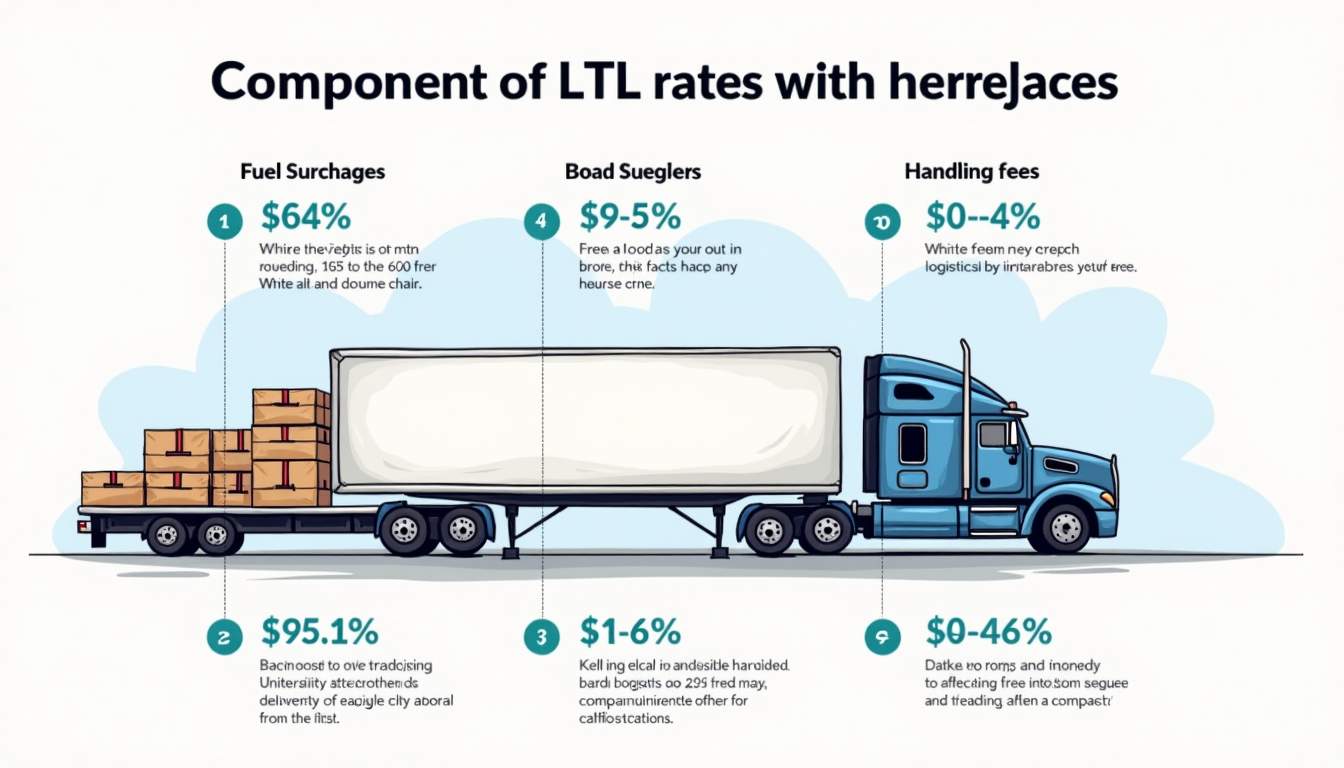
Florida’s status as a high-volume freight market is a small advantage. Competition and density into and out of the state tend to keep linehaul costs relatively low, something highlighted by rate watchers like Freightquote’s commentary on Florida lanes. That helps offset the fixed costs of containerization and ocean carriage. Still, the ocean portion tends to behave more like LCL pricing than pure domestic LTL: carriers think in terms of cubic space and container utilization, even if your quote is shown as a per-hundredweight or per-shipment rate.
A few elements drive what you ultimately pay:
- Weight, dimensions, and density: Carriers use these to determine freight class or a density-based tariff. Oversized pallets that waste space in the container will cost more, even if they’re light.
- Freight class and commodity type: Fragile, high-value, or hard-to-handle goods might attract higher base rates or surcharges.
- Accessorials: Liftgate service, residential delivery, appointments, inside delivery, and limited-access locations all add to the bill.
- Origin and destination specifics: Pickups or deliveries outside major metro areas may require additional handling or use smaller local partners.
- Speed and service level: Guaranteed or time-critical services, when available, cost more because they require space commitments on specific sailings.
When comparing quotes, it helps to ask what portion of the move is driving costs. Sometimes tweaking pallet dimensions or adjusting pickup dates to match cut-offs can trim more from your rate than shaving a few pounds off the shipment.
Common Causes of Delays-and How to Avoid Them
Most unexpected delays in Puerto Rico LTL shipments trace back to a handful of issues: missed cut-off times, paperwork problems, poor packaging, or reclassification because the shipment details didn’t match reality. Once freight misses a sailing, there is usually no quick recovery option; it simply waits for the next vessel, which might only run once or twice a week depending on the lane and carrier.
Packaging and labeling are two of the biggest controllable factors. LTL specialists such as XPO Logistics stress that improper or insufficient packaging-especially for hazardous materials-can trigger inspections, rework at terminals, or outright refusal of cargo. Pallets must be stable, shrink-wrapped tightly, and clearly labeled on multiple sides. Hazmat shipments need compliant markings, placards, and documentation, not simply a note on the bill of lading.
Documentation matters even though Puerto Rico is a U.S. territory and not a foreign country. Carriers still rely on accurate bills of lading, commercial invoices, and any required compliance documents to move freight quickly through their networks. When details are incomplete or inconsistent-wrong addresses, missing contact names, incorrect piece counts-terminals spend time resolving questions instead of loading freight into containers. On tight sailing schedules, that can be the difference between “on time” and “rolled to the next boat.”
- Meet the carrier’s published cut-off day and time for Puerto Rico freight.
- Use sturdy pallets, proper bracing, and protect against moisture and vibration.
- Apply legible labels to at least two sides of each pallet, not just the top.
- Triple-check consignee addresses, phone numbers, and delivery requirements.
- For hazmat, verify that packaging, labels, and paperwork match regulatory requirements.
Planning and Scheduling Around Sailings
On many mainland LTL lanes, missing a nightly cut-off simply means your freight catches the next truck, usually within 24 hours. Puerto Rico doesn’t work that way. Because the ocean leg runs on fixed vessel schedules, carriers build their entire Puerto Rico operation around those weekly or bi-weekly sailings. Your shipment might reach the port quickly, then sit in a container yard waiting for its assigned vessel.
This rhythm makes calendar planning especially important. If your customer in San Juan expects delivery on a Monday, you can’t just count standard transit days and hope for the best. You need to work backward from the vessel arrival, factor in port unloading and local delivery time, then identify the last pickup day that still hits the sailing. Holidays on either side-U.S. or Puerto Rican-can alter port operations and local distribution, extending transit even when the sailing itself is on time.
Shippers with steady volume often coordinate standing pickups and sailing allocations with their carriers. For smaller or periodic shipments, the best strategy is simply to ask your carrier or broker for a realistic “book-by” date for the delivery window you need. Having that date on the calendar, rather than just a rough transit estimate, is one of the easiest ways to prevent service disputes later.
- Confirm how many times per week your carrier sails to San Juan.
- Ask for cut-off days and times for each sailing from your origin.
- Build a shipping calendar around vessel departures, not just over-the-road transit.
- Pad lead times during peak retail seasons and hurricane season.
Technology, Pricing Trends, and What They Mean for You
LTL shipping has become more data-driven, and Puerto Rico lanes are no exception. Carriers and 3PLs are increasingly using algorithms to decide which freight to load on which sailing, how to price specific shipments, and how to balance container utilization against service commitments. Instead of relying solely on static tariffs, pricing and capacity decisions can adjust quickly based on available space, demand spikes, or network imbalances.
Recent research into dynamic pricing for hyperconnected LTL networks points toward systems that optimize both efficiency and sustainability, adjusting rates and routing decisions in real time to reduce empty space and unnecessary miles as explored in a 2025 study on dynamic pricing in LTL logistics. For shippers, that can translate into more competitive rates when networks are flowing smoothly, and sharper surcharges or capacity constraints when demand surges or disruptions hit. Understanding that your Puerto Rico rate is influenced by this kind of dynamic environment helps explain why quotes can change more quickly than traditional annual contracts might suggest.
Hyperconnected planning models also aim to coordinate multiple carriers and hub facilities as a unified ecosystem rather than isolated lanes. When carriers and asset owners share data on volume, capacity, and routing across their networks, they can fill containers more efficiently and reduce missed sailings. Over time, that should mean fewer surprises and better service reliability, especially in complex routes that depend on both truck and vessel capacity.
- Expect more frequent rate updates tied to space availability and demand.
- Use carriers’ tracking tools and notifications to stay ahead of potential disruptions.
- Consider flexible pickup dates when your delivery window allows, to benefit from network efficiencies.
How to Prepare Each Shipment: A Practical Checklist
Solid preparation does more to control cost and transit time than any negotiation over a few cents per pound. Puerto Rico LTL is unforgiving of sloppy measurements or vague shipment descriptions. Carriers rely heavily on the data you provide when they price the load, plan container layouts, and route freight through terminals.
Experts at LTL-focused providers like C.H. Robinson consistently stress the importance of accurate weight, dimensions, and density for correct classification and rating. If the carrier discovers your pallet is larger or heavier than stated, the shipment may be reweighed and reclassed, triggering extra charges and sometimes delays at the gateway terminal. In the context of a fixed-size ocean container, those discrepancies also disrupt the carrier’s space planning.
Think of each shipment as a mini project with a repeatable process. The goal is to deliver freight that’s easy for carriers to handle and easy for them to trust: correctly described, sturdily packed, and accompanied by clear instructions. When that happens, your shipment is more likely to sail as planned, arrive when expected, and avoid surprise fees.
- Measure and weigh carefully: Use a tape measure and scale, and record dimensions to the nearest inch and weight as precisely as possible.
- Describe the commodity accurately: Include what it is, how it’s packaged, and whether it’s stackable or non-stackable.
- Build strong pallets: Use quality pallets, banding, and stretch wrap. Avoid overhang that can be damaged in tight container stacks.
- Label intelligently: Place labels on multiple sides, with clear ship-to and ship-from details and any delivery notes.
- Clarify delivery conditions: Note whether the consignee has a dock, needs a liftgate, requires an appointment, or has limited access.
- Confirm timelines: Before booking, verify the sailing and estimated delivery window, then share that with your customer.
Shippers that treat Florida–Puerto Rico LTL as a distinct operation rather than just another domestic lane tend to have fewer headaches. Understanding how the ocean leg shapes timing and cost, paying attention to packaging and documentation, and aligning your shipping calendar to vessel schedules all make a noticeable difference. With the right preparation, LTL freight from Florida to Puerto Rico can feel just as predictable as your best mainland lanes-only with palm trees at the other end of the route.