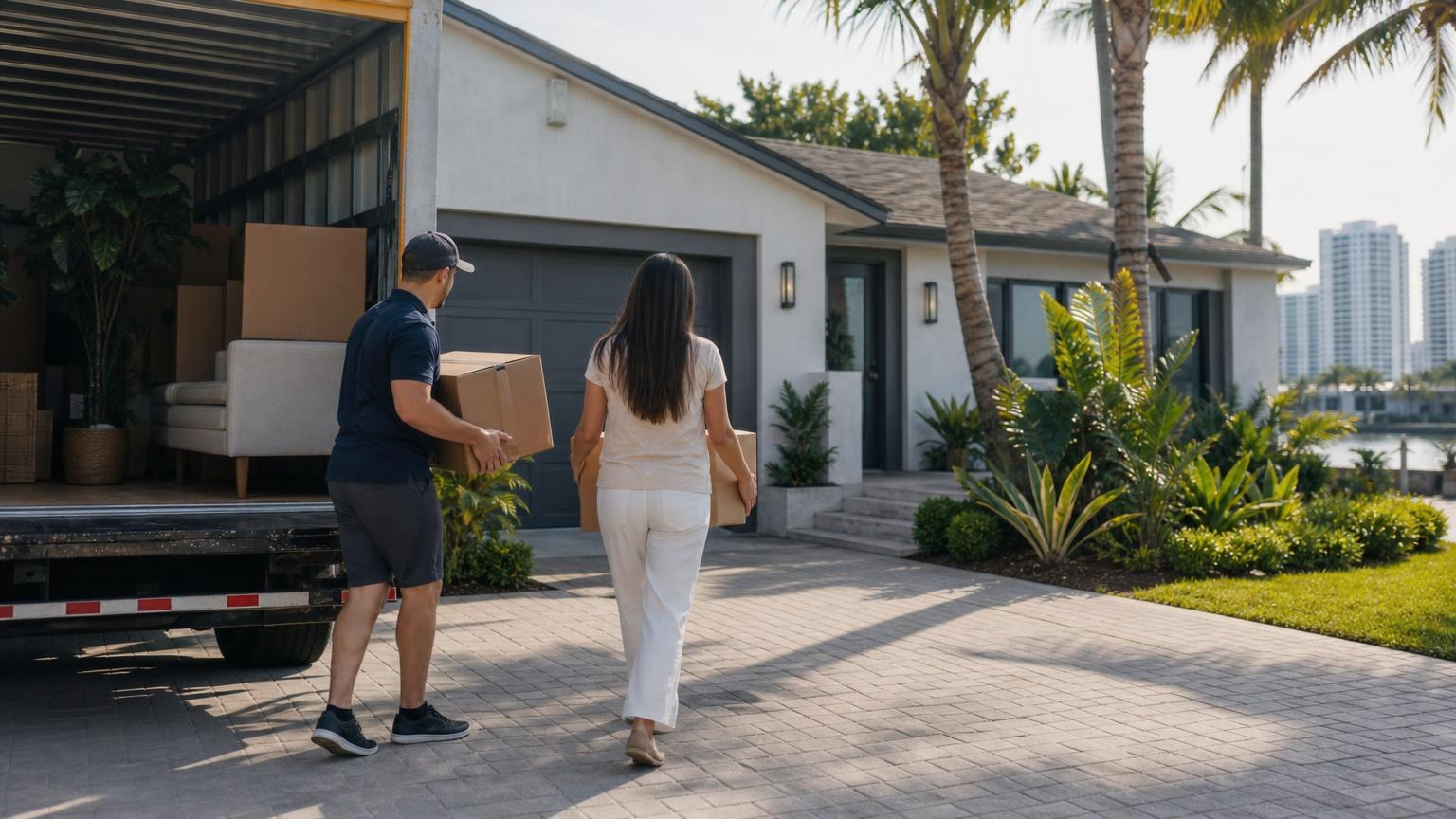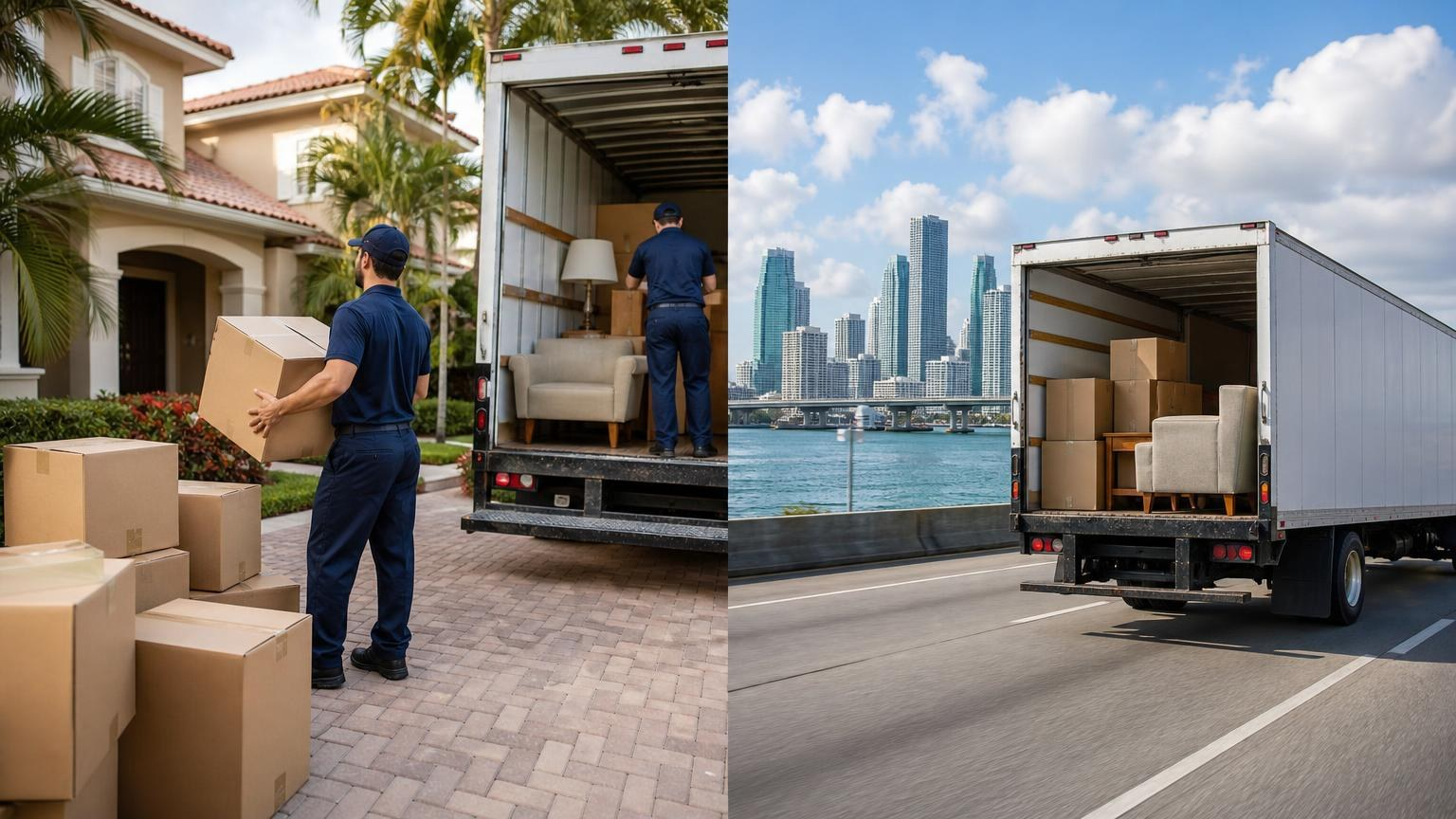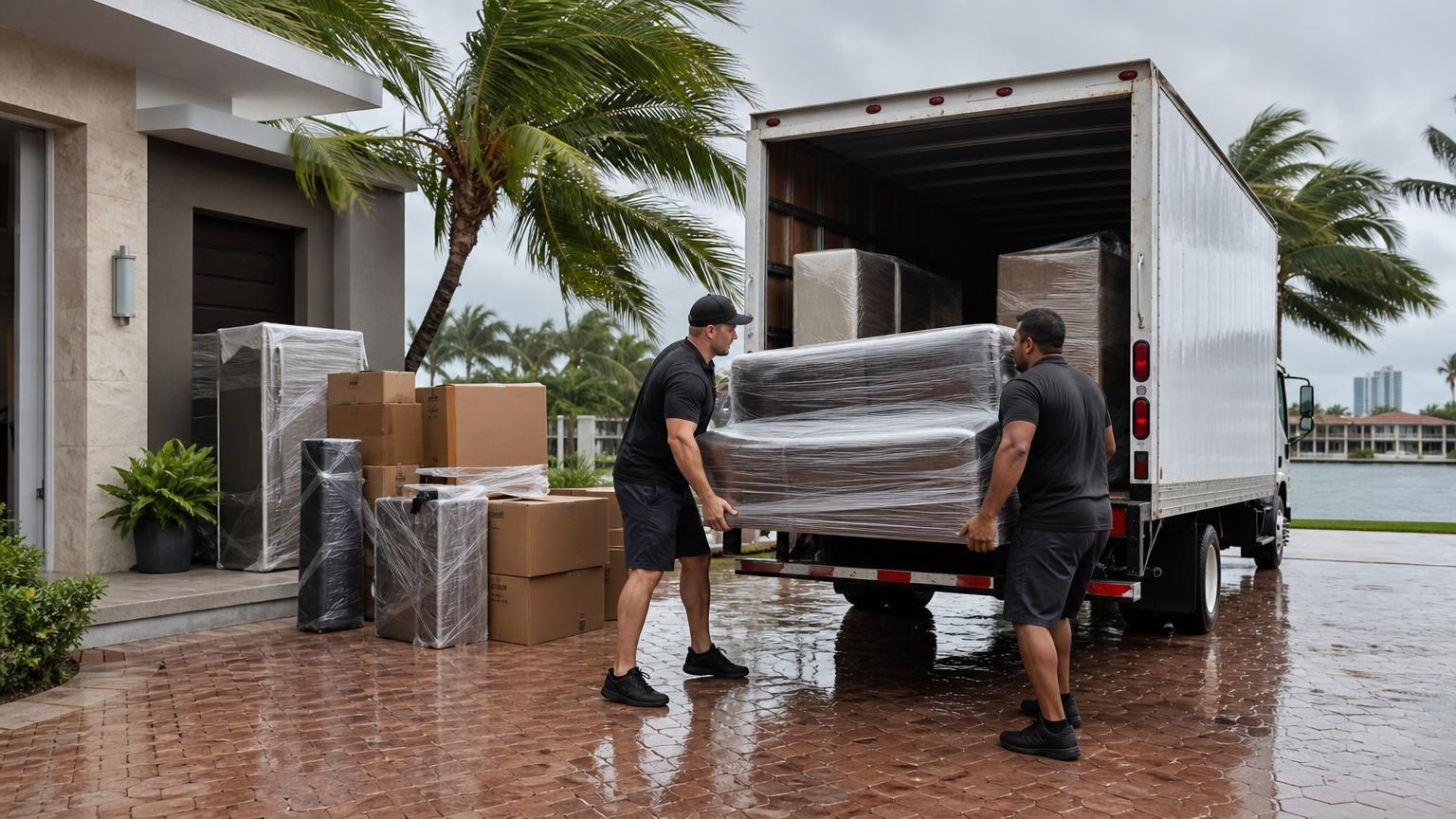
Miami’s hurricane season runs from June 1 through November 30, and roughly 60% of residential moves in South Florida happen during exactly that window. Whether you’re relocating across Brickell or heading north toward Fort Lauderdale, the overlap between peak moving season and peak storm season creates a unique set of risks that most people don’t fully appreciate until they’re staring at a tropical storm warning with half their belongings on a truck. Safe relocations during hurricane season in Miami require more than crossing your fingers and checking the weather app: they demand real planning, the right insurance, and movers who actually know what they’re doing in subtropical conditions.
The stakes are higher than a rained-out moving day. We’re talking about water damage to furniture, mold growth on belongings that sit in humidity for too long, and the very real possibility of a move being delayed by days or even weeks if a named storm tracks toward the coast. Here’s how to handle all of it.
Timing Your Move Wisely
The single biggest variable you can control during a hurricane-season move is timing. Not just the month, but the specific week, the day of the week, and even the time of day. Miami’s weather patterns during storm season follow some predictable rhythms, and smart movers use those rhythms to their advantage.
June and early July tend to be the calmest stretch of the official season. The Atlantic is still warming up, and major hurricanes are rare before mid-August. If you have any flexibility at all, scheduling your move for early to mid-June gives you the widest safety margin. August through mid-October is the statistical peak for named storms in the Atlantic basin, with September historically being the most active month. If your move falls during this window, you’ll need to plan with more contingency time built in.
Beyond the calendar, pay attention to daily weather cycles. Summer afternoons in Miami bring near-daily thunderstorms, often rolling in from the Everglades between 2:00 and 5:00 PM. Morning moves that start at 7:00 or 8:00 AM and wrap loading before early afternoon avoid the worst of these pop-up storms. That alone can save your furniture from getting soaked on the walk between the front door and the truck.
Traffic also shifts during storm season. When a tropical system is approaching, I-95 and the Palmetto Expressway become evacuation corridors, and even a storm that’s days away can trigger enough panic buying and gas station lines to turn a 45-minute drive into a three-hour ordeal. Monitor the National Hurricane Center’s five-day forecast cone and avoid scheduling any move activity when Miami-Dade County falls within that cone.
Pre-Season Planning
The best hurricane-season moves start weeks or months before the truck shows up. Here’s a realistic timeline:
- 8 to 10 weeks out: Book your moving company. During hurricane season, reputable Miami movers fill up fast because everyone’s trying to lock in the same early-morning, early-June slots. Waiting until four weeks out often means you’re stuck with whoever’s left.
- 6 weeks out: Order specialty packing materials. Standard cardboard boxes absorb moisture like sponges in Miami’s 80%+ humidity. Invest in plastic moving bins (rental services like Bin-It or similar local companies charge $3 to $6 per bin per week) and waterproof covers for mattresses and upholstered furniture.
- 4 weeks out: Create a storm contingency plan. Identify a climate-controlled storage unit near your route as a backup. If a storm forces a delay, you need somewhere to stash belongings that won’t turn into a mold incubator. Units along the US-1 corridor in South Miami or near the Dadeland area tend to have good availability and easy highway access.
- 2 weeks out: Start packing non-essentials and prepare a “go bag” with three to five days of clothing, medications, important documents, phone chargers, and cash. This bag stays with you regardless of what happens with the move.
- 3 days out: Check the NHC forecast daily. If a tropical system is within the five-day cone aimed at South Florida, have a frank conversation with your moving company about postponement options.
One detail people consistently overlook: your utilities. If you disconnect power at your old place and a storm delays your move-in at the new one, you could end up with perishable food, no air conditioning in 95-degree heat, and nowhere comfortable to stay. Keep utilities active at both locations until you’re physically settled, even if it means paying for an extra week of service.
Insurance & Documentation
Standard homeowner’s or renter’s insurance policies often have significant gaps when your belongings are in transit, and those gaps widen during declared weather events. Before your move, call your insurance provider and ask three specific questions:
- Does my policy cover belongings during a move, including while they’re on a truck or in temporary storage?
- Are weather-related damages (wind, rain, flooding) covered during transit?
- Is there a deductible difference for storm-related claims versus standard damage claims?
Most standard policies provide limited or no coverage for goods in transit. You’ll likely need one of two supplemental options: full-value protection through your moving company (typically $1 to $2 per pound per article, or a flat rate based on declared value) or a separate moving insurance policy from a third-party provider. Full-value protection from a licensed mover means they’re responsible for the replacement value of any item they damage. The cheaper alternative, released-value protection, only covers $0.60 per pound, which means your 10-pound laptop gets you $6.00 if it’s destroyed. That’s essentially worthless.
Document everything before packing. Take timestamped photos and videos of all valuable items, electronics, and furniture. Record serial numbers for electronics. Keep receipts for anything purchased within the last two years. Store all of this documentation in the cloud, not on a device that could be damaged during the move itself.
For high-value items like art, antiques, or musical instruments, consider custom crating. In Miami, custom crating for a single large painting runs $150 to $400 depending on size, and a piano crate can cost $300 to $600. These prices feel steep until you compare them to the replacement cost of a water-damaged Steinway or an original piece of art.
Florida law requires all intrastate movers to register with the Florida Department of Agriculture and Consumer Services (FDACS). Before signing any contract, verify your mover’s registration at the FDACS website. For interstate moves, your mover must have a USDOT number registered with the Federal Motor Carrier Safety Administration (FMCSA). Any company that can’t produce these credentials on request is a red flag you should not ignore.
One more insurance consideration specific to hurricane season: flood insurance. If your new property is in a FEMA-designated flood zone (and large portions of Miami Beach, Hialeah, and areas near Biscayne Bay are), standard homeowner’s insurance won’t cover flood damage. NFIP policies typically have a 30-day waiting period before coverage kicks in, so purchase flood insurance at least a month before your move-in date.
Working With Professional Movers
Hiring the right moving company for a hurricane-season relocation in Miami is fundamentally different from hiring movers in, say, Denver in April. You need a crew that understands humidity management, has contingency protocols for weather delays, and carries the right equipment for subtropical conditions.
Start by asking prospective companies these specific questions during the estimate process:
- What is your weather cancellation and rescheduling policy? Reputable companies will reschedule at no additional charge if a tropical storm or hurricane warning is issued for the area. Get this in writing. Companies that charge rebooking fees for weather cancellations are either inexperienced with Miami moves or predatory.
- Do you use climate-controlled trucks? Standard metal moving trucks can reach interior temperatures of 140°F+ in Miami summer sun. That heat, combined with humidity, warps wood furniture, melts adhesives, and can damage electronics. Climate-controlled or at minimum well-ventilated trucks with reflective exterior coatings make a measurable difference.
- How do you protect items from moisture during loading and unloading? The answer you want to hear involves shrink wrap for upholstered pieces, moisture barrier blankets, and tarps staged at the truck entrance for quick deployment if rain starts. If the answer is “we try to move fast,” keep looking.
- Do you have secure, climate-controlled storage available if the move is interrupted? A storm that stalls over the Gulf can delay moves by a week or more. Your mover should have a plan for where your belongings go if they can’t be delivered on schedule.
The price difference between a budget mover and a properly equipped one during hurricane season typically runs 15% to 30% more. For a standard three-bedroom home in Miami, expect to pay between $1,200 and $3,500 for a local move with a reputable company during peak season, depending on distance, volume, and specialty items. That premium buys you equipment, insurance, and experience that cheap operators simply don’t have.
Watch for common scams that spike during hurricane season. The “hostage” scenario is the most notorious: a company gives a low estimate, loads your belongings, then demands a significantly higher price before unloading at your destination. Protect yourself by getting binding estimates (not non-binding ones) in writing, paying deposits by credit card rather than cash or wire transfer, and never hiring a company that won’t do an in-person or detailed video walkthrough of your home before quoting.
For commercial relocations, the logistics multiply. If you’re moving an office near Coral Gables or a retail space in Wynwood, coordinate with your building management about loading dock reservations and elevator access. Many commercial buildings in Miami restrict move-in and move-out to weekends or after-hours, and those restrictions don’t flex for weather delays. A phased move, where you relocate critical IT infrastructure and servers first (ideally in a climate-controlled vehicle with shock-dampening), followed by furniture and general inventory, reduces the risk of total operational shutdown if a storm interrupts the process.
IT equipment deserves special attention. Hard drives, servers, and networking gear are extremely sensitive to both humidity and temperature swings. Use anti-static packaging, silica gel packets inside sealed containers, and avoid stacking heavy items on top of electronics boxes. If your office move involves server racks, budget $500 to $1,500 for professional IT relocation specialists who handle disconnection, transport, and reconnection.
One practical tip that experienced Miami movers swear by: schedule your move for a Monday or Tuesday. Most people prefer weekend moves, which means weekday availability is better, prices can be 10% to 20% lower, and you’ll have access to your moving company’s A-team crews rather than the weekend overflow staff. If a storm develops over the weekend, a Monday move gives you Sunday to make a go or no-go decision with current forecast data.
For anyone moving into a high-rise along Brickell Avenue or in the Edgewater neighborhood, check whether your building has hurricane shutters or impact windows already installed. If not, factor in the time and cost of installing temporary storm protection before your belongings are inside. A unit full of furniture with floor-to-ceiling windows and no shutters during a Category 2 storm is a scenario you want to avoid entirely.
Making Your Hurricane-Season Move a Success
Safe relocations during Miami’s storm season come down to three things: planning early enough to have options, protecting your belongings with the right materials and insurance, and hiring movers who treat weather contingencies as standard operating procedure rather than an afterthought. The financial difference between a well-planned move and a disaster recovery situation can easily reach $10,000 or more when you factor in damaged property, emergency storage, and temporary housing.
Book your movers at least eight weeks out, invest in waterproof packing materials, verify insurance coverage and licensing credentials, and build at least a one-week buffer into your timeline for weather delays. Keep the NHC forecast bookmarked on your phone from June through November, and don’t let optimism override common sense when a storm is in the forecast cone.
If you’re planning a move during hurricane season in Miami, start getting quotes now. The best crews and the best time slots disappear fast, and the companies worth hiring are the ones that are already booked weeks in advance.