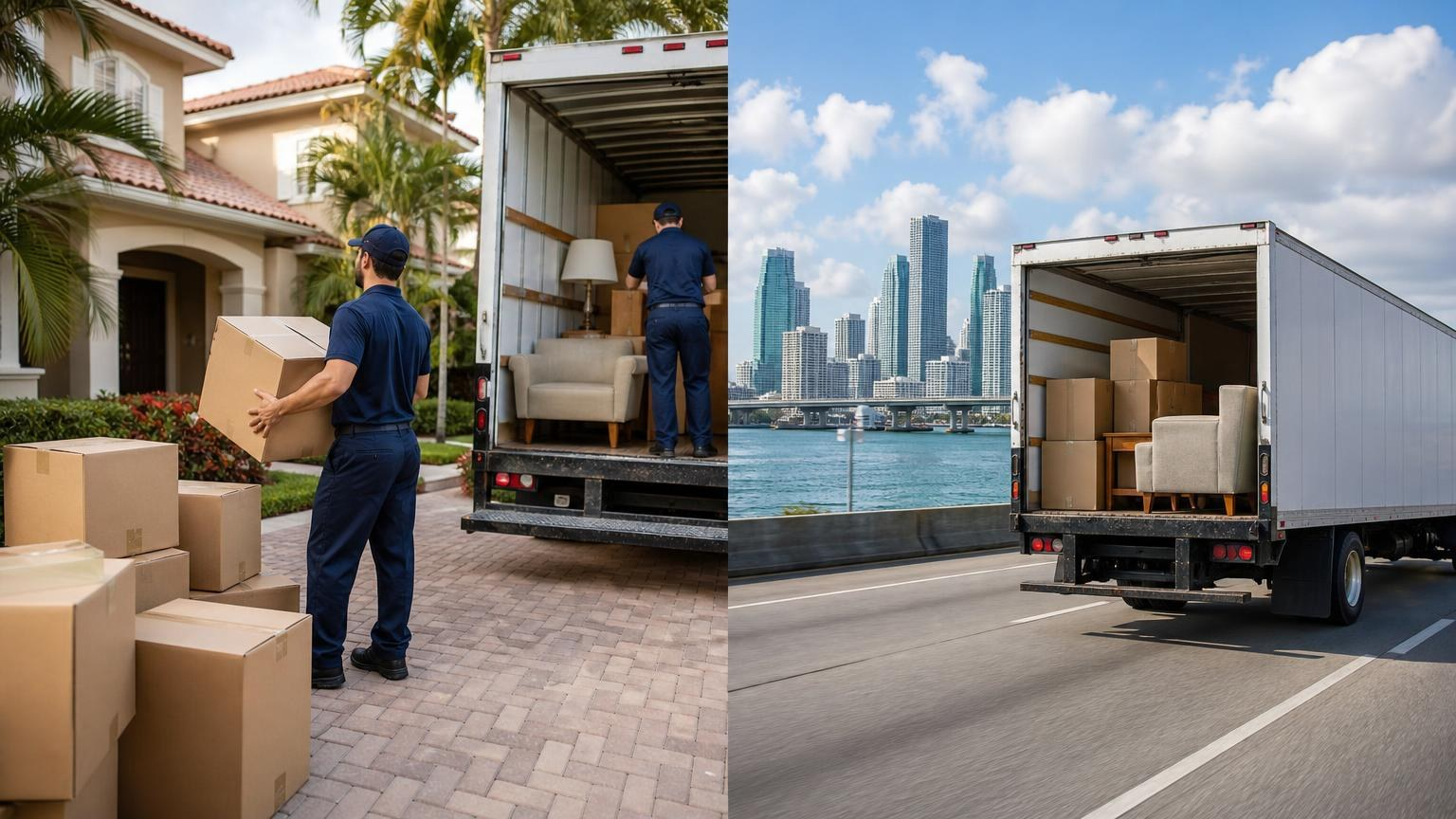
Moving in Miami presents a unique set of challenges that most other cities simply don’t share: oppressive heat, afternoon thunderstorms that roll in like clockwork from June through October, and traffic congestion along I-95 and the Palmetto Expressway that can turn a 10-mile trip into a two-hour ordeal. Whether you’re relocating from Brickell to Coral Gables or shipping your entire household to Seattle, the type of moving service you choose matters more than you might think. Picking the wrong one doesn’t just cost extra money: it can mean damaged belongings, missed delivery windows, and a whole lot of unnecessary stress. If you’ve been weighing local versus long-distance moving services in Miami and aren’t sure which fits your situation, this guide breaks down everything from definitions and regulations to real cost estimates so you can make a confident decision.
Understanding Your Move Type
The distinction between local and long-distance moves isn’t just about how far the truck travels. These two categories operate under entirely different pricing models, regulatory frameworks, insurance structures, and timelines. Choosing the right service starts with understanding exactly where your move falls on that spectrum, because a company that excels at hauling furniture across Kendall may not be equipped or licensed to transport your belongings to North Carolina.
In Florida, the dividing line is generally straightforward. A move that stays within a 50-mile radius or remains inside the same county is classified as local. Anything beyond that, especially moves that cross state lines, falls into the long-distance or interstate category. Some moving companies define long-distance as any move over 100 miles regardless of whether it stays within Florida, so always clarify this with your mover before signing a contract.
Intra-Miami Relocations
Most moves within Miami-Dade County qualify as local. Think of relocations from Wynwood to Little Havana, from Doral to Homestead, or from a downtown high-rise to a house near Zoo Miami. These moves typically happen in a single day, and movers charge by the hour rather than by weight or cubic footage.
A typical local move in Miami involves a crew of two to four movers, a single truck, and a straightforward loading-driving-unloading sequence. The crew shows up in the morning, wraps and loads your belongings, drives to your new place, and unloads everything before the end of the day. For a one-bedroom apartment in Edgewater moving to a comparable unit in Coconut Grove, you’re looking at roughly three to five hours of work.
Local movers in Florida must be registered with the Florida Department of Agriculture and Consumer Services (FDACS). Every legitimate mover will carry an FDACS registration number, which you can verify on the department’s website. If a company can’t produce this number, walk away. Miami has a well-documented problem with rogue movers who quote low prices, load your belongings onto a truck, and then demand significantly more money before they’ll unload: a scam the industry calls a “hostage situation.” Verifying FDACS registration is your first line of defense.
Timing matters for local moves in Miami more than in most cities. If you’re moving during the summer months, crews will be working in heat indexes that regularly exceed 105°F. Experienced local movers start early, sometimes as early as 7 a.m., to get the heaviest lifting done before the worst afternoon heat. Weekend moves in peak season (May through September) also book up fast because that’s when most leases turn over, so plan at least three to four weeks ahead.
One often-overlooked factor for intra-Miami moves: building logistics. If you’re moving out of or into a condo tower in Brickell, Edgewater, or Sunny Isles Beach, you’ll likely need to reserve a freight elevator and a loading dock time slot through the building’s management. Some buildings restrict moves to weekdays only, or charge fees of $200 to $500 for elevator padding and common-area protection. Check with both your origin and destination buildings well before moving day.
Cross-Country Moves
Long-distance moves from Miami operate on a completely different playbook. If you’re relocating from Miami to another state, your mover must hold a USDOT number issued by the Federal Motor Carrier Safety Administration (FMCSA). This is non-negotiable. Interstate movers without proper federal registration are operating illegally, and you’ll have virtually no recourse if something goes wrong.
The biggest practical difference you’ll notice is how pricing works. Instead of hourly rates, long-distance movers charge based on the total weight of your shipment and the distance traveled. A moving company will typically send an estimator to your home, either in person or via a video survey, to assess the volume and weight of your belongings. Be wary of any company that gives you a binding quote over the phone without seeing your stuff: that’s a classic bait-and-switch setup where the final bill arrives thousands of dollars higher than the estimate.
Transit times for long-distance moves from Miami vary considerably. A move to Atlanta might take two to four days, while a cross-country relocation to Los Angeles could take 10 to 14 days or even longer during peak season. Your belongings may share truck space with other customers’ shipments in what’s called a consolidated or LTL (less than truckload) move, which keeps costs lower but extends delivery windows. If you need a guaranteed delivery date, you’ll pay a premium for a dedicated truck.
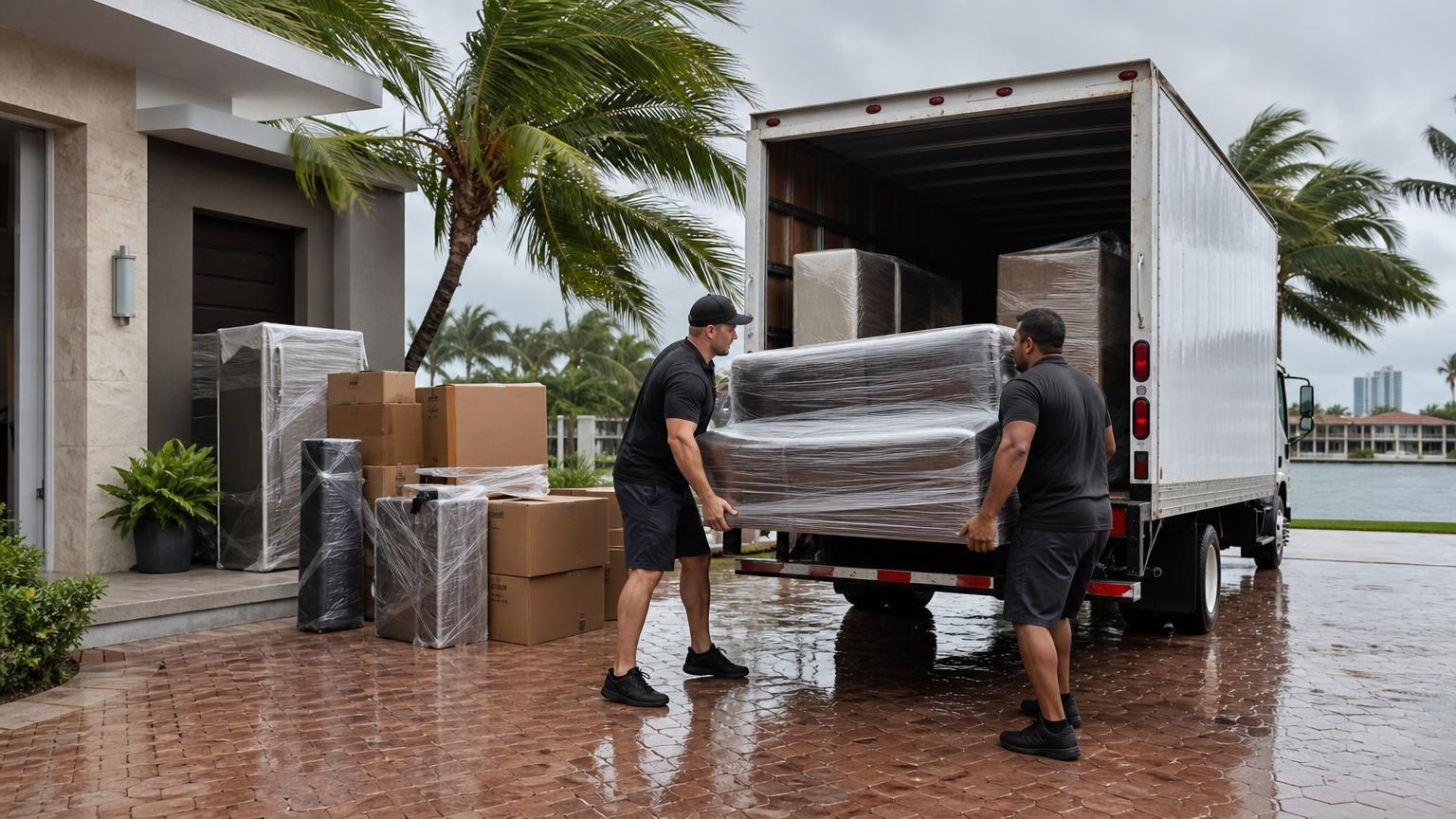
Miami’s geographic position at the southern tip of the Florida peninsula adds a wrinkle that people often don’t consider: there’s only one way out. All northbound long-distance moves funnel through the same corridors, primarily I-95 along the east coast or I-75 through the interior. During hurricane season, these routes can become gridlocked if an evacuation is underway. Reputable long-distance movers factor weather contingencies into their scheduling, but it’s worth discussing this explicitly with your carrier if you’re planning a move between June and November.
Climate considerations also extend to what’s on the truck. Miami’s humidity can wreak havoc on belongings during a multi-day transit, especially if the truck sits in direct sun. Wooden furniture can swell, leather goods can develop mildew, and electronics can suffer moisture damage. Quality long-distance movers use climate-appropriate packing materials: moisture barriers for upholstered furniture, silica gel packets in sealed boxes of electronics, and breathable fabric wraps instead of plastic for clothing and linens. Ask your mover specifically what climate protections they use. If they look at you blankly, find someone else.
For moves that stay within Florida but cover significant distance, say from Miami to Jacksonville (roughly 345 miles) or Miami to Tallahassee (about 475 miles), you’re in a gray area. These are technically intrastate moves regulated by FDACS rather than FMCSA, but they operate more like long-distance moves in terms of pricing, transit time, and logistics. Most Florida movers classify anything over 100 miles as long-distance regardless of whether it crosses a state line.
Cost Factors & Estimates
Understanding how moving costs break down is where most people either save or waste significant money. The pricing structures for local and long-distance moves are fundamentally different, and knowing what drives costs up or down gives you real negotiating power.
For local moves within Miami-Dade County, the primary cost driver is time. Most local movers charge between $120 and $180 per hour for a two-person crew with a truck in 2026. Adding a third mover bumps the rate to roughly $160 to $220 per hour. A standard two-bedroom apartment move in Miami typically runs four to six hours, putting total costs in the $600 to $1,200 range. Larger homes with more furniture, or moves involving stairs and tight hallways, can push past $1,500.
Several factors can inflate local moving costs beyond the base hourly rate:
- Travel time charges:Many movers start the clock when they leave their warehouse, not when they arrive at your door. If you’re in a far-flung neighborhood like Homestead and the company is based in North Miami, you could be paying for 45 minutes to an hour of drive time before loading even begins.
- Stair and elevator fees:Moves involving walk-up apartments or buildings without freight elevators often carry surcharges of $50 to $100 per flight.
- Bulky item fees:Piano moving in Miami typically costs $300 to $800 depending on the type (upright versus grand) and access difficulty. Hot tubs, safes, and pool tables also carry specialty fees.
- Packing services:If you want the movers to pack your belongings rather than doing it yourself, expect to add $300 to $800 for a typical two-bedroom unit, including materials.
- Weekend and peak-season premiums:Moving on a Saturday in July will cost 15% to 25% more than a Tuesday in February at most Miami companies.
Long-distance moves from Miami follow a weight-and-distance formula. A rough benchmark for 2026: expect to pay between $0.50 and $0.80 per pound per 1,000 miles for a standard household shipment. A typical three-bedroom home weighs between 8,000 and 12,000 pounds. So a move from Miami to New York (roughly 1,280 miles) might cost $5,000 to $9,000, while a move to Los Angeles (about 2,750 miles) could run $7,000 to $14,000.
Those ranges are wide for a reason. The final price depends on several variables beyond weight and distance:
- Shipment density and volume:Lightweight but bulky items (like large sectional sofas or king-size mattresses) take up truck space without adding much weight, and some carriers adjust pricing based on cubic footage rather than pure weight.
- Access at origin and destination:If the moving truck can’t park within 75 feet of your door, you’ll face a “long carry” surcharge. Narrow streets in neighborhoods like Coconut Grove or the Roads can trigger this fee.
- Storage-in-transit:If your new home isn’t ready when your shipment arrives, temporary warehouse storage typically costs $150 to $300 per month.
- Insurance and valuation coverage:Basic released-value protection (included free by federal law) covers only $0.60 per pound per item: meaning your 50-pound flatscreen TV is covered for just $30. Full-value protection, which covers repair or replacement at current market value, adds 1% to 3% of your total declared shipment value.
- Custom crating:Artwork, antiques, marble tabletops, and flat-screen TVs over 65 inches often require custom wooden crates. Expect $100 to $500 per item depending on size and fragility.
One cost factor unique to Miami that catches people off guard: many condo buildings in Brickell, Downtown, and the beach communities require a Certificate of Insurance (COI) from your moving company before granting building access. If your mover doesn’t carry adequate liability coverage or can’t produce a COI on short notice, you may face delays or need to reschedule. Confirm this requirement with your building management at least two weeks before your move date and relay the insurance requirements to your moving company immediately.
Getting accurate estimates requires in-home or video surveys for both local and long-distance moves. Phone-only quotes are unreliable at best and predatory at worst. Request at least three estimates from different companies, and make sure each one is based on the same inventory of items. Compare not just the bottom-line price but also what’s included: some quotes bundle packing materials and disassembly while others charge for every roll of tape.
A practical timeline for budgeting your move: if you’re relocating locally within Miami, start getting quotes four to six weeks out. For long-distance moves, especially during summer, begin the process eight to twelve weeks before your target date. Prices tend to climb as availability shrinks, and the best crews book early.
Watch for red flags in any estimate. A price that’s dramatically lower than the competition usually means the company plans to add charges later. Legitimate movers will provide either a binding estimate (a guaranteed price based on the surveyed inventory) or a binding not-to-exceed estimate (where you pay the actual cost up to a capped maximum). Non-binding estimates are just that: non-binding. The final bill can legally exceed the estimate, sometimes by a painful margin.
Making the Right Choice for Your Miami Move
The decision between local and long-distance moving services comes down to three things: distance, regulation, and budget. If you’re staying within Miami-Dade County, hire an FDACS-registered local mover, get an hourly rate quote based on an in-person assessment, and schedule your move for early morning on a weekday if possible. If you’re crossing state lines or covering hundreds of miles within Florida, verify your mover’s USDOT number, insist on a weight-based binding estimate from an in-home survey, and discuss climate protection for your belongings during transit.
Regardless of which service you need, the same core advice applies: verify licensing, get multiple written estimates, read reviews from real customers, and never pay a large deposit upfront before moving day. Miami’s moving market has plenty of excellent, professional companies, but it also attracts more than its share of scammers who prey on people in the stress and chaos of relocation. A little due diligence before you sign a contract can save you thousands of dollars and a mountain of frustration. Start gathering quotes today so you’re not scrambling when your lease end date arrives.