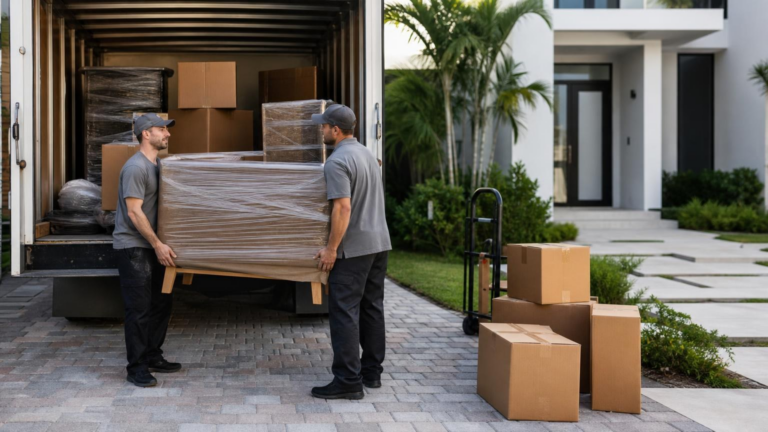

Miami moves have a way of going sideways for reasons that have nothing to do with how much stuff you own. A condo board that only allows elevator reservations on weekdays, a summer thunderstorm rolling in at 2 p.m., or gridlock on the Palmetto Expressway can turn a four-hour job into a ten-hour ordeal. The moving company you hire matters, but the way you schedule with them matters just as much.
Most people treat booking movers as a single phone call. In South Florida, it works better as a sequence of decisions: when to start, who to vet, what to confirm in writing, and how to plan around buildings, weather, and traffic. Skip one of those steps and you often pay for it in overtime charges or a rescheduled date during peak season.
This guide walks through how to schedule a move with a Miami-based moving company from the first research session to the last box. It covers licensing checks specific to Florida, estimate types, condo rules from Brickell to Aventura, hurricane season planning, and what to do on move day. Whether you’re relocating a two-bedroom apartment in Little Havana or a small office in Doral, the same principles apply, with a few important differences we’ll flag along the way.
Planning Your Miami Relocation Timeline
The biggest scheduling mistake is starting too late. Miami’s busiest moving windows line up with lease cycles (the first and last days of each month), the summer months when families relocate before school, and the winter influx of seasonal residents. Reputable crews book out weeks in advance during those stretches.
Here’s a realistic timeline for a local or long-distance residential move:
- 8 weeks out:Set your target date and a backup date. Start researching companies and decluttering.
- 6 weeks out:Request at least three estimates. Contact your building management about move rules.
- 4 weeks out:Choose a mover, sign the contract, and pay any deposit. Reserve elevators and loading areas.
- 2 weeks out:Begin packing non-essentials. Confirm utility transfers with FPL and your internet provider.
- 1 week out:Reconfirm your arrival window, crew size, and building access with the mover.
- 1-2 days out:Pack an essentials bag, defrost the fridge, and prepare parking.
Commercial moves need more lead time, often 10 to 12 weeks. An office relocation involves IT disconnection, furniture disassembly, and frequently a phased schedule where one department moves each weekend to keep the business running. If you manage a medical office in Coral Gables or a retail space in Wynwood, factor in permits and loading dock reservations at both locations.
A mid-week, mid-month date is usually cheapest and easiest to secure. Tuesday the 14th will almost always be more flexible than Saturday the 31st.
Researching Local Miami Movers and Credentials
Miami has hundreds of moving companies, and their quality ranges from excellent family-run operations to outfits that change names every year to escape bad reviews. Your research phase is where you filter out the second group.
Start with recent reviews across several platforms, not just one. Look for patterns rather than single complaints: repeated mentions of late arrivals, surprise fees, or damaged furniture are meaningful. Pay attention to how the company responds to negative reviews, since a defensive or copy-pasted reply tells you something about how they’ll handle your claim.
Ask about their experience with your specific situation. A company that mostly handles single-family homes in Kendall may struggle with a 40-story tower in Sunny Isles Beach. Questions worth asking:
- How many high-rise moves do you do per month?
- Do you own your trucks, or subcontract the work?
- Are your crew members employees or day laborers?
- Do you handle specialty items like pianos, safes, or art?
Watch for red flags early. A mover who quotes a price over the phone without seeing your belongings, demands a large cash deposit, or has no physical address in Miami-Dade should go straight to the bottom of your list.
Verifying Florida State Licensing and Insurance
Florida requires intrastate movers to register with the Florida Department of Agriculture and Consumer Services (FDACS) under Chapter 507 of the Florida Statutes. Any company moving you within the state, say from Miami to Orlando or just from Hialeah to Homestead, should have an active FDACS registration number. You can look it up through the department’s online license search, and legitimate movers will show it on their website, contract, and often their trucks.
Interstate moves add a federal layer. Movers crossing state lines need a USDOT number and operating authority from the Federal Motor Carrier Safety Administration (FMCSA). Check that the number is active and that the company is listed as a carrier or broker, because brokers don’t actually move your belongings themselves.
Ask for proof of liability insurance and workers’ compensation coverage. If an uninsured worker is hurt carrying your sofa down a stairwell, you don’t want that dispute landing on you or your homeowner’s policy.
Requesting and Comparing Accurate Moving Estimates
Get at least three written estimates, and make sure each one is based on the same information. If one company counts your patio furniture and another doesn’t, you’re comparing different jobs.
A good estimate should spell out the crew size, truck size, hourly rate or flat price, travel fees, materials, and any specialty charges. In Miami, typical local rates for a three-person crew often fall somewhere in the range of $150 to $250 per hour, though prices vary by season and company. Specialty services add up quickly:
| Service | Typical Range |
| Upright piano (local) | $250 – $600 |
| Grand piano (local) | $500 – $1,200 |
| Custom crating for art or glass | $150 – $600 per crate |
| Gun safe or heavy safe | $200 – $500 |
| Full packing service (2-bedroom) | $600 – $1,500 |
Treat these as ballpark figures, and ask each mover for their specific pricing in writing. A quote far below the others isn’t a bargain. It’s often the setup for a bait-and-switch, where the price balloons once your belongings are on the truck.
Virtual vs. In-Home Surveys for Inventory
Video surveys have become standard, and for straightforward moves they work well. You walk through your home with a phone while an estimator notes furniture, boxes, and access challenges. It’s quick and lets you get quotes from several companies in one afternoon.
An in-home survey makes more sense for larger homes, high-value items, or tricky access like narrow staircases in older Miami Beach buildings. The estimator can measure doorways, spot items that need crating, and see the parking situation firsthand.
Whichever method you choose, open every closet, the garage, and the balcony. Hidden items are the most common reason estimates fall apart on move day. Be cautious of any mover who refuses to do a survey of any kind, because that’s a classic warning sign of a company planning to inflate the price later.
Understanding Binding vs. Non-Binding Quotes
A binding estimate locks in your price based on the inventory surveyed. If the move takes longer than expected, you pay the agreed amount, though adding items can trigger a revised quote.
A non-binding estimate is the mover’s best guess, and the final bill depends on actual time or weight. For interstate moves, federal rules generally cap what you must pay at delivery on a non-binding estimate at 110 percent of the estimate, with any balance billed later. That protection exists precisely because of “hostage situations,” where crooked movers refuse to unload until you pay an inflated price.
Some companies offer a “binding not-to-exceed” quote, which protects you from overages while letting you pay less if the job runs short. For most households, that’s the best of both options.
Navigating Miami-Specific Moving Logistics
Miami’s geography creates challenges that generic moving checklists ignore. Traffic on I-95, the Dolphin Expressway (SR 836), and the Palmetto (SR 826) can add an hour or more to a cross-town move during rush periods. Causeway crossings to Miami Beach, Key Biscayne, and the islands are bottlenecks, and drawbridge openings on the MacArthur or Venetian causeways can stall a truck unexpectedly.
Event days matter too. A Dolphins game or major concert at Hard Rock Stadium in Miami Gardens jams the Florida Turnpike and surrounding roads for hours. Art Basel in early December snarls Miami Beach, and Heat games at Kaseya Center slow downtown traffic. Check the event calendar before locking in your date.
Ask your mover how they plan routes. Experienced local crews know to start early, avoid the I-95 and I-395 interchange at peak hours, and stage trucks to minimize causeway crossings.
Coordinating with Condo Associations and Building Managers
If you’re moving into or out of a condo in Brickell, Edgewater, or Aventura, the building’s rules may dictate your schedule more than the moving company does. Many buildings restrict moves to weekdays between roughly 9 a.m. and 5 p.m., require a refundable damage deposit, and limit how long you can hold the service elevator.
Most associations also demand a certificate of insurance (COI) from your mover naming the building and management company as additional insured. Get the exact wording from the manager and send it to the mover at least a week ahead, because a missing COI can get your crew turned away at the loading dock.
Commercial buildings follow similar logic with stricter rules: after-hours loading dock windows, freight elevator bookings, and security escorts. If you’re moving servers or networking gear, schedule your IT vendor to disconnect equipment the day before and have the movers use anti-static wrapping.
Accounting for Hurricane Season and Tropical Weather
Atlantic hurricane season runs from June 1 through November 30, with peak activity usually from August through October. If you must move during those months, choose a mover with a clear weather rescheduling policy and get it in writing. Ask whether you’ll lose your deposit if a tropical storm warning forces a postponement.
Even without a named storm, summer brings near-daily afternoon thunderstorms. Book a morning start whenever possible so loading wraps up before the rain. Humidity is the quieter threat: wooden furniture can warp, electronics can collect condensation, and fabrics can mildew in a sealed truck.
A few practical defenses:
- Pack clothing in breathable cotton or wardrobe boxes, never sealed plastic bags.
- Toss silica gel packets into boxes with electronics, documents, and leather goods.
- Ask the crew to use moisture barriers and padded blankets for wood pieces.
- Unpack upholstered items and mattresses within 24 hours of delivery.
Securing Your Date and Reviewing the Contract
Once you’ve picked a mover, lock in the date with a signed contract, often called an order for service or bill of lading. Don’t rely on a verbal confirmation or a text message. A written agreement is your only real protection if something goes wrong.
Read the entire document before signing. Confirm it includes:
- Pickup and delivery addresses, date, and arrival window
- Total price or hourly rate, plus every potential surcharge (stairs, long carry, fuel, materials)
- Deposit amount and refund terms
- Valuation coverage level and its cost
- Cancellation and rescheduling policy, including weather clauses
- The company’s FDACS or USDOT number
Valuation deserves extra attention. Basic released-value coverage typically pays only a small amount per pound, which means a $2,000 television might be reimbursed for a fraction of its value. Full-value protection costs more but covers repair or replacement.
Deposits should be reasonable. A modest deposit by credit card is normal, while a demand for half the total in cash is a serious warning sign. Paying by card also gives you dispute options if the company disappears.
Finalizing Pre-Move Preparations and Documentation
The week before your move is about confirmation and organization. Call the mover to reconfirm the crew size, arrival window, and any special items. Then call your building manager again to verify your elevator reservation, because bookings occasionally get double-assigned.
Create a simple inventory of high-value items with photos showing their current condition. Timestamped photos of your antique dresser or flat-screen TV make a damage claim far easier to prove. Keep jewelry, passports, medications, and important documents with you rather than on the truck.
Prepare both properties for the crew. Reserve street parking if you’re in an area like South Beach or Coconut Grove where space is scarce, and check whether your city requires a temporary permit for a large truck. Clear pathways, remove area rugs that could cause trips, and protect floors in the new place.
For businesses, this is when you label every desk, chair, and box with color codes tied to a floor plan of the new space. Send employees instructions on packing their own workstations and back up all data before IT disconnects anything.
Managing Move Day and Post-Move Procedures
Be present when the crew arrives, ideally with coffee and cold water, since Miami heat wears crews down fast. Walk the foreman through the home, point out fragile items, and confirm the price and paperwork before loading begins. If the foreman suddenly quotes a much higher number than your binding estimate, stop and call the office before anything goes on the truck.
During loading, review the inventory sheet as items are tagged and note any existing damage. At delivery, check items against that list before signing. Write “subject to inspection” if you can’t check everything, and note visible damage directly on the paperwork.
After the move, unpack moisture-sensitive items first. File any damage claims promptly; interstate shipments typically allow up to nine months, but sooner is always better. Recover your condo deposit by requesting a walkthrough with the building manager, and leave an honest review to help the next family.
Scheduling a South Florida move well comes down to a few habits: start early, verify credentials with FDACS or FMCSA, insist on a survey-based written estimate, and plan around buildings, traffic, and weather. Book a morning slot, keep your paperwork tight, and you’ll spend move day settling in rather than arguing over the bill.