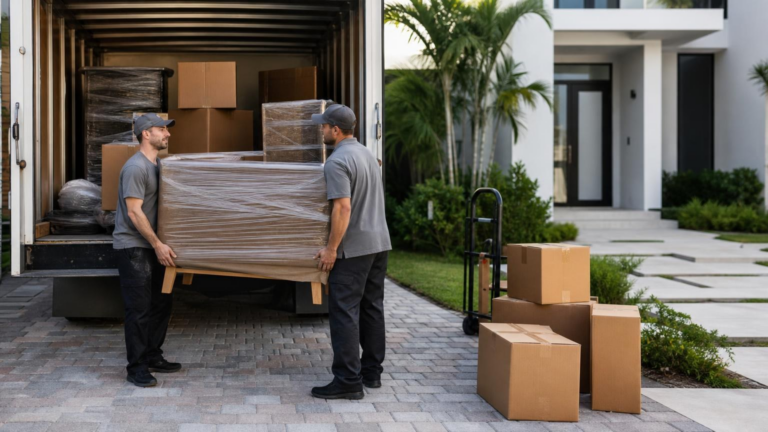

A long-distance quote that grows by a few thousand dollars between Miami and the delivery address is a common moving complaint. The quote looked fine in April. Then the truck showed up in May, the crew counted your boxes, and the price changed.
A binding estimate is the most reliable protection against that. Getting a real one, rather than a phone number dressed up as a promise, requires knowing what federal rules allow, what Miami-specific details move the price, and which red flags mean you should hang up.
Understanding Binding Estimates for Miami Long-Distance Relocations
A binding estimate is a written agreement that fixes the price of your interstate move based on the goods and services listed in it. If you ship exactly what’s on the inventory and request nothing extra, the mover cannot charge more than the amount on that document. That applies whether you’re leaving Brickell for Atlanta or Kendall for Chicago.
This differs from a non-binding estimate, which is only the mover’s best guess. With a non-binding estimate, the final bill depends on the actual weight of your shipment once it’s put on a certified scale. Under federal rules, the mover can’t demand more than 110% of a non-binding estimate at delivery. Any remaining balance is billed later, typically with 30 days to pay.
For Miami households, the binding option matters because so much can shift between quote and pickup. Summer is peak season, with hurricane-season uncertainty, heavy demand from snowbirds leaving in late spring, and long hauls up I-95 or across Alligator Alley toward the Gulf Coast. A fixed number removes one major variable from an already stressful process.
A binding estimate only covers what’s written down. If you add a sectional sofa the week before the move, the price can change. The agreement protects you only as far as your inventory is accurate.
The Legal Requirements for Florida Interstate Movers
Any company moving household goods across state lines falls under the Federal Motor Carrier Safety Administration (FMCSA). The regulations at 49 CFR Part 375 set out how estimates must work. The key rules are:
- Every estimate, binding or not, must be in writing and include a copy for you.
- The mover must give you the FMCSA booklet “Your Rights and Responsibilities When You Move” and information about its dispute resolution program.
- In most cases, the mover must perform a physical survey of your goods if you’re within 50 miles of its location. You can waive this in writing and use a virtual survey instead, but the waiver has to be your choice.
- The estimate must clearly list the services included and any charges for accessorial work.
Florida adds its own requirements. Movers handling moves within Florida must register with the Florida Department of Agriculture and Consumer Services (FDACS). For a long-distance move out of state, federal registration is what counts: the company needs an active USDOT number and, for most carriers and brokers, an MC number. A legitimate Miami mover operating both locally and interstate will usually have both FDACS registration and federal authority.
Binding vs. Binding Not-to-Exceed Quotes
A standard binding estimate locks the price in both directions. If your shipment weighs less than expected, you still pay the agreed amount.
A binding not-to-exceed estimate is often a better deal. It sets a ceiling, but if your goods weigh less than estimated, you pay the lower weight-based price. Many reputable interstate movers offer this option, and it’s worth asking for directly. If you’re downsizing from a four-bedroom house in Pinecrest to a two-bedroom condo, and you’re likely to sell or donate furniture after the survey, the not-to-exceed version keeps those savings with you.
Step-by-Step Guide to Requesting a Binding Quote
Here’s a practical timeline for getting a binding estimate for a Miami long-distance move, working back from moving day:
- 8 to 10 weeks out:Shortlist three to five interstate movers. Check their USDOT numbers before booking any survey.
- 6 to 8 weeks out:Schedule surveys with your top three. Book all of them within the same week so pricing reflects the same conditions.
- 5 to 6 weeks out:Compare the written estimates side by side. Look at inventory, services, and valuation coverage, not just the total.
- 4 weeks out:Choose a mover, confirm the estimate type, and request any revisions in writing.
- 1 to 2 weeks out:Review the order for service and confirm pickup and delivery windows.
- Moving day:Check the bill of lading against your estimate before signing anything.
Booking earlier matters more in South Florida than in many markets. May through August is busy, and moves timed around school calendars fill crews quickly.
Scheduling the Mandatory In-Home or Virtual Survey
The survey is the foundation of any honest binding quote. An estimator walks through every room, opens closets, checks the garage, and asks what’s staying behind. A virtual survey over FaceTime or a mover’s video app works the same way, provided you show everything.
Treat a company that refuses to survey and offers a binding price over the phone as a serious red flag. A quote based on “how many bedrooms do you have?” is how bait-and-switch pricing starts. Scammers quote low, load your goods, then claim the shipment was larger and refuse to unload or deliver until you pay more. This is known in the industry as a hostage situation.
During the survey, open the storage unit, the hall closet stacked with luggage, and the patio furniture. Anything you hide or forget is not covered by the agreed price.
Creating a Detailed Inventory of Household Goods
Before the estimator arrives, make your own room-by-room list. Note large items (beds, dressers, sectionals), fragile pieces (mirrors, art, glass tables), and anything requiring disassembly. Then compare your list to the mover’s inventory line by line.
The Miami climate should also shape how you pack. In high humidity, a sealed truck traveling north in July can become a mold trap. Don’t store clothing in plastic bags, which hold moisture against fabric. Use breathable wardrobe boxes. Add silica gel packets to boxes of electronics, leather goods, and documents, and ask whether the mover uses moisture barriers or plastic sheeting under furniture. Note these protections on the estimate so they’re priced in rather than added later.
Factors That Influence Your Miami Move Pricing
Distance and weight drive most interstate pricing, but several other variables change the number.
Season is the biggest. Late May through August is expensive, and early fall can be unpredictable because of hurricane risk. A move booked for mid-October through February often prices lower, though snowbird traffic reverses in spring.
Route matters as well. Trucks leaving Miami-Dade usually take I-95 north or Florida’s Turnpike, and crews that hit Golden Glades Interchange congestion or game-day traffic near Hard Rock Stadium lose hours. Movers build that into their quotes. Specialty items also add cost. Typical ranges you might see include:
- Upright piano:roughly $300 to $800 added to an interstate move
- Grand piano:often $800 to $2,000 or more, depending on size and stairs
- Custom wooden crating for art, marble, or chandeliers:commonly $150 to $600 per crate
- Storage-in-transit:usually billed monthly, plus extra handling fees
These are general market ranges, not guarantees. Ask each mover to price every specialty item on the written estimate.
Miami High-Rise and Parking Access Challenges
Condo buildings in Brickell, Edgewater, Sunny Isles, and Miami Beach often require reserved service elevators, certificates of insurance (COI) naming the association, and moves scheduled within narrow weekday windows. If the truck can’t park at the loading dock and crews must carry items 200 feet down a street, expect a long-carry fee. If a full-size tractor-trailer can’t fit on a Coconut Grove street lined with banyan trees, you may need a shuttle truck.
Commercial moves face similar restrictions on a larger scale. Office towers downtown often limit moves to nights or weekends, need IT equipment packed in anti-static materials, and may require a phased schedule across several days. Whether residential or commercial, disclose every access detail during the survey so it’s included in the binding price.
Avoiding Common Pitfalls and Hidden Fees
Most horror stories about binding quotes trace back to a few common situations:
- The low-ball phone quote. The price is far below the other bids, with no survey. This is the classic setup for a hostage situation.
- Large deposits. Reputable movers generally collect payment at delivery. A demand for a big upfront cash or wire payment is a warning sign.
- Broker confusion. Some companies are brokers who sell your move to an unknown carrier. Brokers must disclose that status. Ask directly who will actually load your goods.
- Blank or incomplete paperwork. Never sign a document with empty fields, and never sign a bill of lading that doesn’t match your estimate.
- Vague valuation. The basic “released value” coverage pays by weight, not by an item’s worth. A 10-pound laptop may receive only a few dollars. Ask about full value protection and get its cost in writing.
How Add-On Services Affect Your Binding Agreement
Adding services after the estimate (extra packing, a forgotten storage unit, an unplanned shuttle) changes the agreement. Federal rules let the mover revise the binding estimate before loading, or treat it as non-binding if you’ve added goods. You should receive any change in writing and sign it.
Requests made at the curb are where costs rise. Make any additions at least a week before pickup and get a revised estimate that you can compare with the original.
Verifying Mover Credentials and FMCSA Compliance
Spend ten minutes checking credentials before you schedule a survey:
- Search the USDOT numberon FMCSA’s public lookup. Confirm the company is authorized for household goods and that its authority is active, not revoked.
- Check broker versus carrier status.The FMCSA record shows which one the company is registered as.
- Review complaint historythrough FMCSA’s household goods complaint resources and the Better Business Bureau.
- Confirm FDACS registrationif the company also performs intrastate moves in Florida. FDACS also handles complaints about Florida movers.
- Visit or verify the physical address.A Doral warehouse you can drive past is a much better sign than a P.O. box or an address that maps to a virtual office.
Be wary of a company whose name on the website differs from the name on the USDOT record. Rebranding is a common way for movers to escape bad reviews.
Finalizing the Paperwork and Order for Service
Once you’ve chosen a mover, you’ll receive an order for service. This document confirms the estimate type, the pickup and delivery dates or windows, the services ordered, and the agreed price. Read it carefully against your binding estimate. The figures and inventory should match exactly.
On moving day, the crew lead will present the bill of lading, which serves as your contract and receipt. Before signing, confirm three things: the estimate type is listed as binding (or binding not-to-exceed), the price matches, and the valuation coverage you selected is recorded. Take photos of every document.
Keep a folder with your estimate, order for service, bill of lading, and inventory with condition notes. If anything arrives damaged in Charlotte or Denver, these papers are the foundation of any claim. Federal rules give you nine months to file a written claim, but filing soon after delivery is usually easier.
Summary of Best Practices for a Secure Miami Move
The best way to secure a binding estimate for your Miami long-distance move comes down to a few habits. Verify credentials first. Insist on a full survey, in person or by video. Disclose every item, closet, and access challenge, from a Sunny Isles service elevator to a backyard storage shed. Ask for a binding not-to-exceed quote so you benefit if your shipment weighs less than expected.
Protect your belongings against Florida’s heat and humidity with breathable boxes, silica gel, and moisture barriers rather than plastic bags. Get every change in writing, and compare each document against the last. If one bid is far below the others and comes without a survey, treat it as a warning rather than a bargain.
Movers who give a fair binding price expect careful questions and will answer them. Movers who avoid those questions are giving you a reason to choose someone else.