
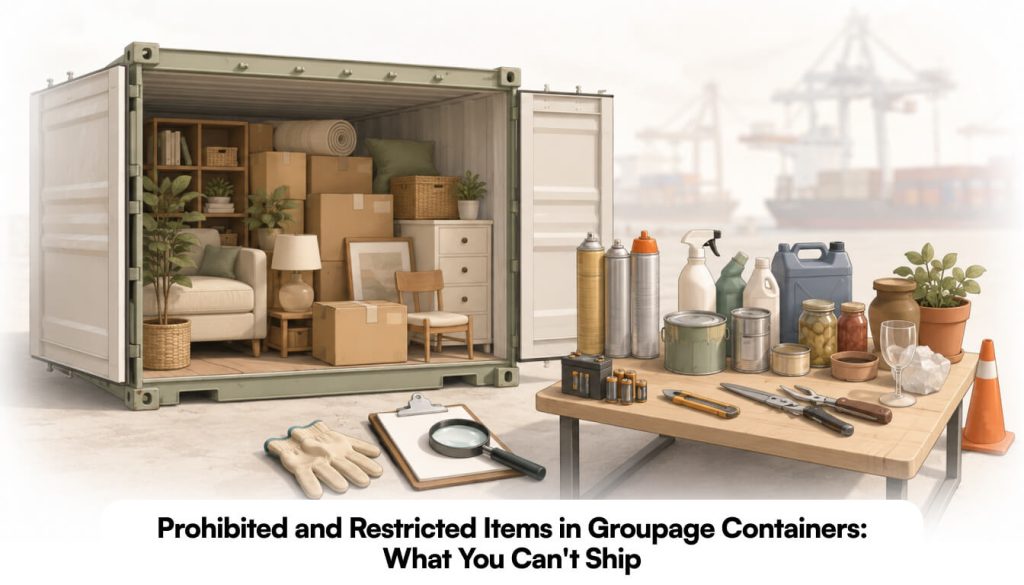
Before packing for an international move, identify goods that need a separate transport or import check. Household products can be regulated because of their contents, materials, condition or intended use. Acceptance depends on the actual item, service and destination.
Start with an inventory and flag questionable items to the coordinator before collection. Permission to own a product, permission to import it and acceptance by the shipping service are different checks.
Review chemicals, fuels and pressurized products
Set aside paints, solvents, cleaning chemicals, fuels, gas cylinders and aerosol products for review. Provide the product name and relevant specifications when requested. An everyday household use does not establish that an item can travel in the planned load.
Ocean dangerous-goods requirements are addressed through the IMO’s IMDG framework, while air transport has its own requirements and acceptance procedures. Have the responsible provider determine the treatment for your shipment.
If an item is not accepted, discuss lawful local disposal, use or another appropriate arrangement before moving day. Do not hide it inside a carton or describe it as a different product.
Identify batteries and battery-powered equipment
Tell the coordinator about loose batteries and equipment such as power tools, e-bikes, scooters or other battery-powered devices. Identify the battery type, whether it is installed and any relevant condition or specification requested for assessment.
IATA’s dangerous-goods guidance explains why common household items can matter in air transport. Passenger-baggage rules should not be assumed to govern arranged household cargo, and an ocean option needs its own acceptance check.
Resolve the item’s handling before packing. Removing a battery or changing its packaging is not a step to improvise without the appropriate instructions for that equipment and shipment.
Check food, plants and outdoor belongings
Flag pantry goods, alcohol, plants, seeds, animal products and outdoor equipment. Requirements can depend on the destination and the precise goods, so a universal household-food list is not enough to establish acceptance.
Used tools, sports equipment and garden items may need attention to soil, plant material or other contamination. For U.S. entry, APHIS explains why soil is controlled. Other destinations have their own biosecurity requirements.
Ask which cleaning, inspection, documentation or exclusion requirements apply to the actual item. Keep accepted goods accurately described in the inventory rather than treating cleaning as an automatic import approval.
Raise questions about materials and special collections
Antiques, musical instruments, art and personal collections can contain materials that need specialist identification or permits. Flag unfamiliar animal or plant-derived components, cultural objects and anything subject to an existing restriction or ownership condition.
Provide photographs, descriptions and any available supporting records. The relevant authority or professional needs to determine whether a particular rule applies. Age, personal use or sentimental value does not by itself answer every transport or import question.
Firearms, ammunition, vehicles and similar special items also need separate review and arrangements. Do not assume they are accepted within an ordinary furniture shipment because there is room in the container.
Distinguish wood packaging from the goods inside
Wooden crates, pallets and packing supports can have their own plant-health requirements. The IPPC’s ISPM 15 information concerns regulated wood packaging in international trade, with exclusions such as certain processed wood materials.
That packaging standard does not replace the rules for importing a plant, wooden article or other household item. Ask the packing provider how the proposed crate or pallet meets the relevant destination requirements.
Nobel’s packing service can be discussed as part of the moving plan. Any claim about a particular packaging specification, treatment or certification should match the actual materials being supplied.
Record the decision in the shipment file
For each flagged item, establish whether it is accepted, excluded or still awaiting information. Keep the relevant instructions or approval with the customs and shipment documents. Make sure the final inventory reflects the agreed goods.
For incoming household goods, consult U.S. customs information and the relevant authorities. For an outbound move, obtain the destination-specific instructions before the final packing list is completed.
When you request an estimate from Nobel Relocation, mention questionable items early and provide the route and proposed shipping method. The international move preparation guide helps place these checks before collection, while the groupage guide explains the wider shared-container journey.